


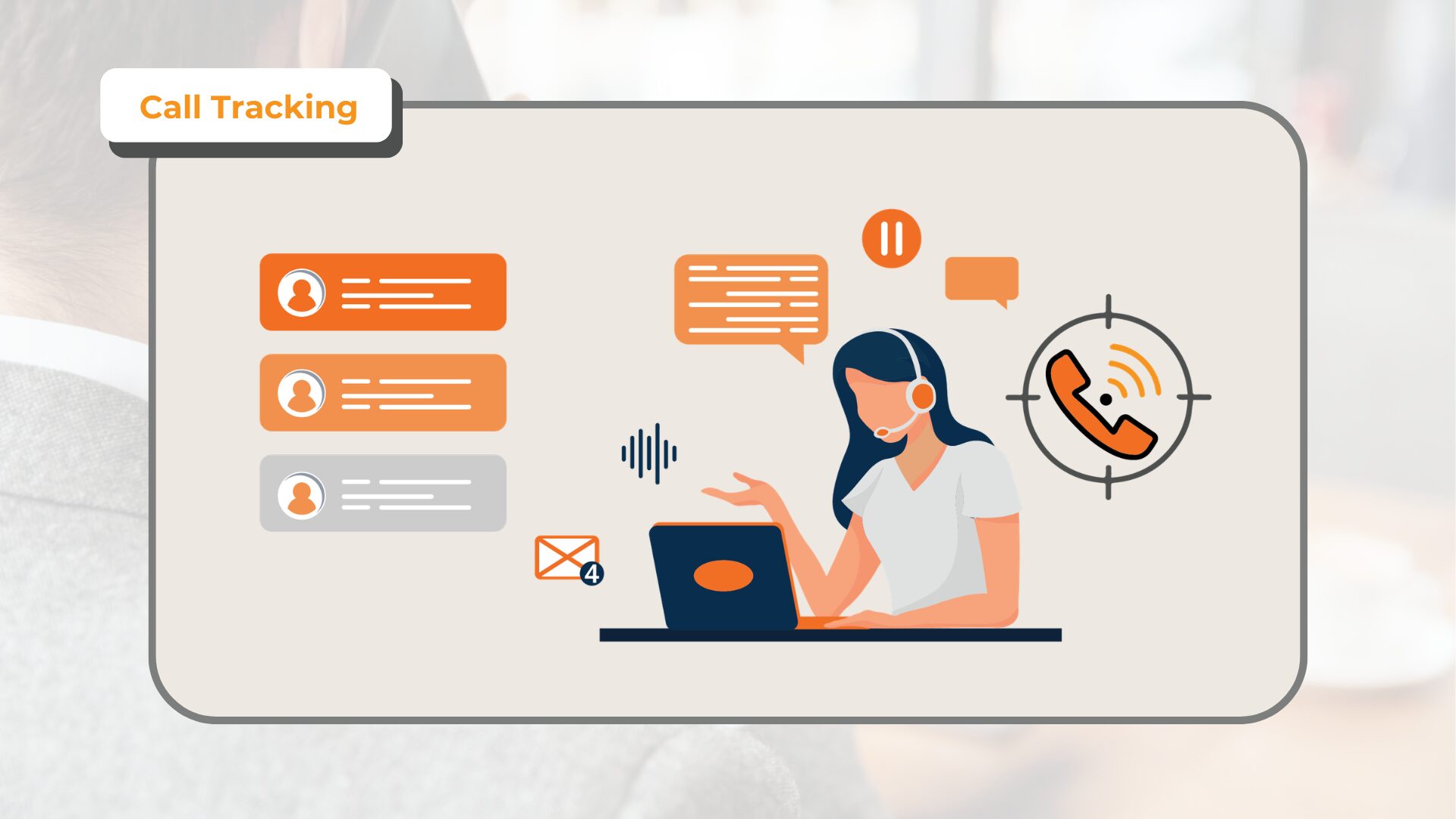
Many businesses rely on phone numbers to generate website leads, yet most of them cannot clearly attribute those inbound calls to a specific campaign, page, or website URL.
When a visitor clicks a search ad, lands on a landing page, and dials a business number, clear visibility into the call source and resulting call conversion is required.
Phone conversations are often the highest-value leads because callers typically show strong purchase intent. Learning how to track calls to a phone number on a website supports accurate phone call tracking, reliable conversion tracking, and proper lead attribution.
With the right call tracking platform, businesses can assign tracking numbers, install a tracking script, connect Google Ads and Google Analytics, activate AI-powered transcription and conversation outcome extraction, and configure structured call routing. This approach turns basic call tracking into measurable phone call conversion tracking, structured call reporting, and clear conversion attribution across marketing tactics.
Why Tracking Website Calls Matters for Your Business
Website traffic alone does not reflect true business performance. A click from a search ad or a visit recorded in Google Search Console does not automatically translate into a sale, a booked appointment, or a qualified lead.
Many businesses see rising click numbers but cannot connect those visits to actual website call conversions. Without structured call tracking, there is no reliable way to link a landing URL, specific landing pages, or a campaign to the resulting inbound calls.
Phone leads often signal stronger intent than form fills. When someone dials a primary phone number after visiting a website, that caller is usually closer to making a decision. That is why website call tracking software and structured call tracking for websites matter. Instead of relying only on traffic reports, businesses can connect inbound calls to precise marketing sources.
What Proper Website Call Tracking Clarifies
- Connects each call to a defined call source, including Google ads, specific ad groups, and tracked campaigns.
- Measures call volume, filtered call conversion, and call duration to evaluate lead quality.
- Supports accurate conversion tracking and structured phone call conversion tracking.
- Links calls to UTM tracking parameters, campaign data, and channel performance.
- Strengthens lead attribution and overall conversion attribution across marketing tactics.
Paid campaigns require validation, especially when allocating ad spend. Businesses need visibility into which campaigns generate qualified website leads. Features such as a call extension can drive calls directly from search results, but those calls can remain disconnected without a structured call tracking platform.
Organic traffic also requires attribution clarity. Calls generated from a Google Business Profile (formerly known as Google My Business) or other directory listings should be tracked separately to assess channel impact.
By using dedicated tracking numbers, Dynamic Number Insertion (DNI), and structured call tracking data, businesses can evaluate campaign effectiveness across paid and organic channels.
Marketing attribution connects each phone conversation to its originating campaign, keyword, or traffic source. When website phone call tracking is implemented correctly, every call is tied to a defined source rather than treated as anonymous.
Can You Track Calls to a Single Phone Number on a Website
A single static business number on a website can receive calls, but it cannot provide meaningful attribution. When the same number is shown to all visitors, every call appears identical in the call list, with no defined call source tied to specific landing pages, ad groups, or campaigns.
This limits proper conversion attribution and phone call conversion tracking, as there is no structured way to determine which marketing tactics generated the call or how channels influenced call volume and overall performance.
The solution is to use dedicated tracking numbers through a structured call-tracking platform. A properly assigned call tracking number or configured number pools connect calls to defined sources and produce actionable call tracking data.
Phone numbers are commodities; the value comes from how the platform assigns attribution, routing, and reporting.
Methods to Track Calls to a Phone Number on a Website
There are several structured approaches to track calls to a phone number on a website, each offering a different level of visibility and control. The appropriate method depends on whether the objective is basic call measurement or comprehensive website phone call tracking with clear conversion attribution and measurable website call conversions.
AvidTrak supports both simple and advanced configurations, allowing businesses to start with foundational tracking and expand into deeper attribution as marketing tactics grow more complex.
1. Static Call Tracking
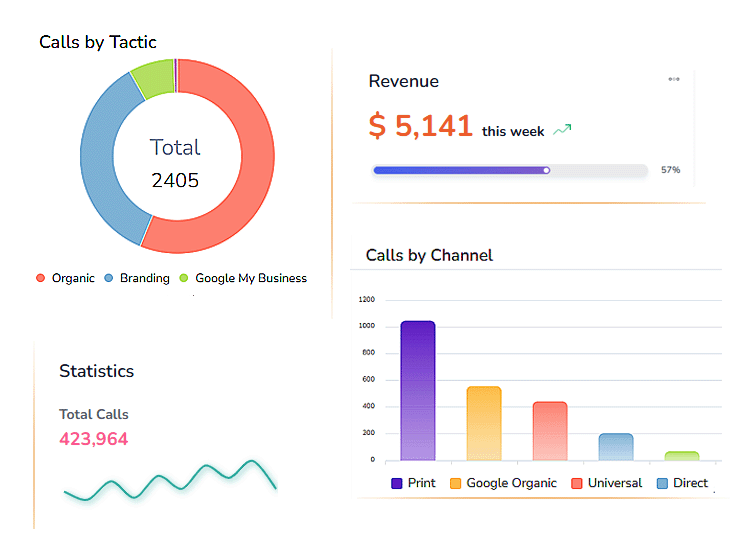
Static call tracking replaces a website’s primary phone number with a single call tracking number. All calls route through that number and are logged inside the call tracking platform, including call-tracking conversations, call duration, and overall conversation quality.
This method works well for simple use cases where the goal is to measure total website call conversions rather than campaign-level detail.
For businesses seeking a straightforward, low-cost setup, AvidTrak offers competitively priced static call tracking for websites, backed by structured reporting and reliable product support.
2. Dynamic Number Insertion (DNI)

Dynamic Number Insertion (DNI) provides more detailed website phone call tracking. A tracking script installed on the website swaps displayed phone numbers based on traffic source, campaign, keyword, or landing page.
DNI strengthens conversion attribution, improves clarity around each call source, and allows accurate measurement of website call conversions across marketing tactics.
AvidTrak supports advanced DNI configurations, including the Google Bot DNI for alignment with a Google Business Profile, as well as subdomain number follow rules that preserve tracking continuity across related site sections. These configurations maintain structured attribution even in multi-campaign or multi-location environments.
3. Google Ads & GA4 Integration
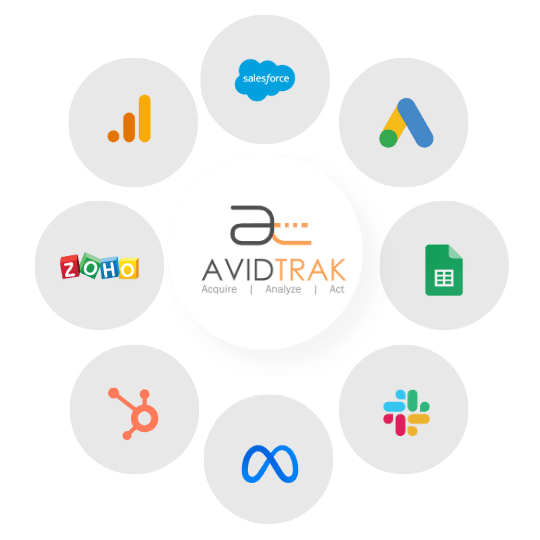
AvidTrak integrates with Google Ads and Google Analytics to report phone calls as measurable conversions. Calls can be assigned a conversion label, pushed into ad accounts, and filtered between new and repeat callers to improve reporting accuracy.
Integration with CRM systems such as Salesforce, HubSpot, and Zoho connects inbound calls to specific marketing tactics. This structure strengthens conversion attribution and centralizes performance data within a single website call tracking software environment.
Advanced Call Tracking Capabilities Beyond Just Tracking
Basic website phone call tracking identifies the source of calls. AvidTrak builds on that foundation with integrated AI analysis, structured routing control, and unified reporting so every call is tracked, categorized, and measured with precision.
4. AI-Powered Transcription & Conversation Outcome Extraction
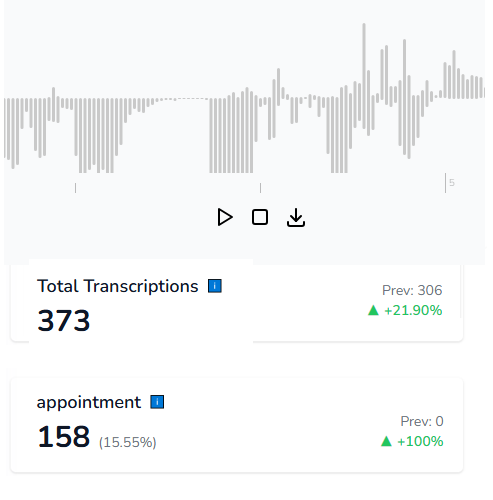
AvidTrak includes AI-powered transcription, which converts recorded call audio into searchable text within the call tracking platform. Recorded call-tracking conversations can be reviewed and filtered quickly without replaying audio files.
AvidTrak also provides AI-powered conversation outcome extraction that automatically flags booking requests, pricing inquiries, and support needs. Outcome tagging and sentiment analysis categorize calls by intent and highlight conversation quality, supporting faster and more accurate follow-up.
This structure converts routine calls into clearly defined website call conversions linked to measurable outcomes rather than generic call logs.
5. Advanced Call Routing & Lead Management
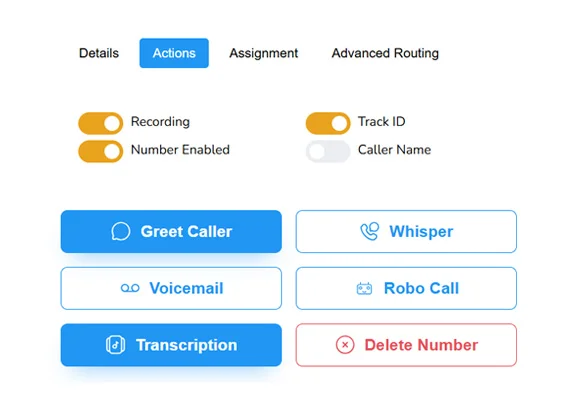
AvidTrak provides advanced call routing options that operate alongside attribution data. Sequential and simultaneous call forwarding, IVR, after-hours routing, area code routing, zip code routing for franchise models, whisper, and warm transfers are configured within the same system that captures performance data.
Routing is typically executed by sales teams, while agencies use attribution and reporting to measure campaign effectiveness. This structure connects marketing tactics to operational handling without separating data from execution.
6. Leena – AI Virtual Receptionist

Leena is AvidTrak’s AI virtual receptionist built directly into the call tracking system. Leena handles after-hours calls, automatically activates, filters spam, and performs warm transfers to the appropriate department.
Leena can be configured with department-specific profiles and captures caller details, including name, callback number, and inquiry type. Because Leena operates natively within AvidTrak, every interaction feeds into structured call tracking data, preserving attribution and reporting visibility.
7. Avidia – Agentic AI Data Analyst

Avidia is an AI-based data analyst embedded within AvidTrak. Avidia answers direct questions about call activity, campaign performance, and conversation outcomes using structured call tracking data, AI-powered transcription, outcome tags, and connected CRM systems.
As an Agentic AI, Avidia retrieves campaign and attribution data instantly without requiring manual dashboards. This capability extends call tracking into structured performance analysis using the same data already captured inside the platform.
How to Track Calls from Specific Marketing Channels
To properly track calls, each marketing channel should use a dedicated tracking number. Assigning unique numbers to each channel allows clear attribution and accurate measurement of website call conversions across campaigns.
Below is how channel-level tracking typically works.
-
Google Ads
Calls generated from Google Ads should use assigned tracking numbers tied to specific campaigns or ad groups. When integrated with conversion tracking, calls can be reported back to ad accounts using a defined conversion label to measure campaign performance.
-
SEO Traffic
Organic visitors arriving through search results should be tracked separately from paid traffic. Using Dynamic Number Insertion (DNI), the displayed number changes based on traffic source, allowing calls to be attributed to organic search rather than paid campaigns.
-
Social Media
Traffic from social platforms should route through a dedicated tracking number. This isolates inbound calls from social campaigns and allows them to be measured independently from other channels.
-
Email Campaigns
Email-driven traffic can be assigned a specific tracking number or configured through tagged URLs. This connects inbound calls back to the originating campaign for structured attribution.
-
Display Ads
Display campaigns often span multiple placements. Assigning unique tracking numbers to each campaign enables the evaluation of which initiatives generate qualified calls.
-
Offline Campaigns (Radio, TV, Print)
Offline marketing requires separate metrics because digital tracking parameters are unavailable. Using unique tracking numbers for radio, television, or print ensures those calls are logged and evaluated alongside digital channels.
Step-by-Step: How to Track Calls to a Phone Number on a Website
Tracking calls from a website follows a structured process. The steps below outline how to properly track calls to a phone number on a website using a reliable system such as AvidTrak.
Step 1: Choose a call tracking provider
Select a platform that supports attribution, routing, and integration with advertising and CRM systems.
Step 2: Purchase a tracking number
Replace the primary website number with a dedicated tracking number or configure number pools for campaign-level visibility.
Step 3: Install the tracking script (DNI)
Add the tracking script to the website so phone numbers change dynamically based on traffic source, campaign, or landing page.
Step 4: Set routing rules
Configure IVR, sequential or simultaneous forwarding, after-hours routing, or zip code routing if required.
Step 5: Connect integrations
Link Google Ads, Google Analytics, and CRM systems to support structured attribution.
Step 6: Enable AI-powered transcription and conversation outcome extraction
Convert calls into searchable data and automatically flag booking, pricing, or support inquiries.
Common Mistakes When Tracking Website Calls
Even when businesses attempt to track calls to a phone number on a website, certain setup errors limit attribution and reporting accuracy.
The most common mistakes include:
- Using one static number across all traffic sources, which prevents clear source-level attribution.
- Not tracking keyword-level data through Dynamic Number Insertion (DNI).
- Ignoring call duration filters, which makes it difficult to separate qualified inquiries from short or accidental calls.
- Failing to integrate call data with CRM systems, which disconnects marketing activity from recorded outcomes.
- Operating without defined call routing rules, which leads to missed or misdirected inbound calls.
- Not using AI-powered transcription and conversation outcome extraction to categorize calls by intent.
Avoiding these errors keeps call tracking aligned with measurable performance and consistent reporting.
Who Needs Website Call Tracking the Most
Certain business models rely heavily on inbound calls and require structured attribution to understand performance.
The following industries typically depend on phone inquiries as a primary conversion path and benefit most from structured website call tracking:
- Franchise businesses need channel-level tracking and zip code routing to direct calls to the correct office locations while maintaining clear attribution across national campaigns.
- Educational institutions often depend on phone inquiries for enrollment. Structured tracking connects campaigns to qualified calls and downstream outcomes.
- HVAC companies receive high-intent service calls from paid search and local listings, making source-level tracking essential.
- Law offices rely on inbound consultations where call duration and conversation analysis help distinguish serious inquiries from general questions.
- Healthcare providers must track calls from search, directory listings, and referral campaigns while maintaining organized reporting.
- Agencies managing multi-channel campaigns require structured call attribution to measure how paid, organic, and offline marketing tactics generate inbound calls for their clients.
In each of these cases, the ability to track calls to a phone number on a website supports clearer attribution, improved routing, and measurable performance across campaigns.
Why AvidTrak Is the Right Choice
Tracking calls to a phone number on a website requires more than simply replacing a number. It requires accurate attribution, structured call routing, and measurable website call conversions within a single connected system.
AvidTrak delivers that structure through affordable pricing, no hidden fees, and more than 14 years of experience solving complex routing and attribution challenges.
Phone numbers are commodities; the difference lies in how tracking data is organized and applied. From lowest-cost static tracking to advanced configurations such as zip code routing for franchise models, AI-powered transcription, and conversation outcome extraction, AvidTrak supports both simple and complex marketing tactics.
Agencies benefit from white-label reporting and client dashboards, while internal sales teams operate within the same attribution framework. Start a free trial today and deploy a call tracking system built to measure performance accurately from the first inbound call.
Frequently Asked Questions
1. How do I track calls to a phone number on a website?
To track calls to a phone number on a website, replace the primary number with a dedicated tracking number or implement Dynamic Number Insertion (DNI). This logs each inbound call inside a call tracking platform and ties it to a traffic source, campaign, or landing page for accurate attribution.
2. Can I track calls without changing my phone number?
Basic call logging can occur without changing a number, but meaningful attribution requires a call tracking number. Using a static tracking number or DNI allows inbound calls to be connected to defined marketing tactics rather than appearing as anonymous call activity.
3. What is dynamic number insertion?
Dynamic Number Insertion (DNI) is a tracking method that swaps the displayed phone number on a website based on traffic source, campaign, keyword, or landing page. This allows businesses to measure which channels generate calls and supports structured conversion attribution.
4. How do I track calls from Google Ads?
Tracking calls from Google Ads involves assigning dedicated tracking numbers to campaigns and connecting the call tracking platform with Google Ads. Calls can then be reported as conversions and linked to specific ad groups for measurable campaign performance.
5. Can I send website call data to GA4?
Yes. Website call data can be sent to Google Analytics 4 by integrating the call tracking platform with GA4. This allows phone call activity to appear alongside website events, supporting channel-level performance analysis.
6. What is AI-powered call transcription?
AI-powered transcription converts recorded call audio into searchable text within the call tracking system. This makes call conversations easier to review and analyze without listening to audio files, while preserving structured reporting.
7. How does zip code call routing work?
Zip code call routing prompts callers to enter their postal code and automatically forwards the call to the nearest office. This is commonly used in franchise models where national marketing campaigns route inbound calls to local operators.
8. What is AI-powered conversation outcome extraction?
Conversation outcome extraction uses AI to automatically flag key moments in a call, such as booking requests or pricing inquiries. These outcomes are tagged within the call record, allowing businesses to categorize calls by intent and measure performance more precisely.


