


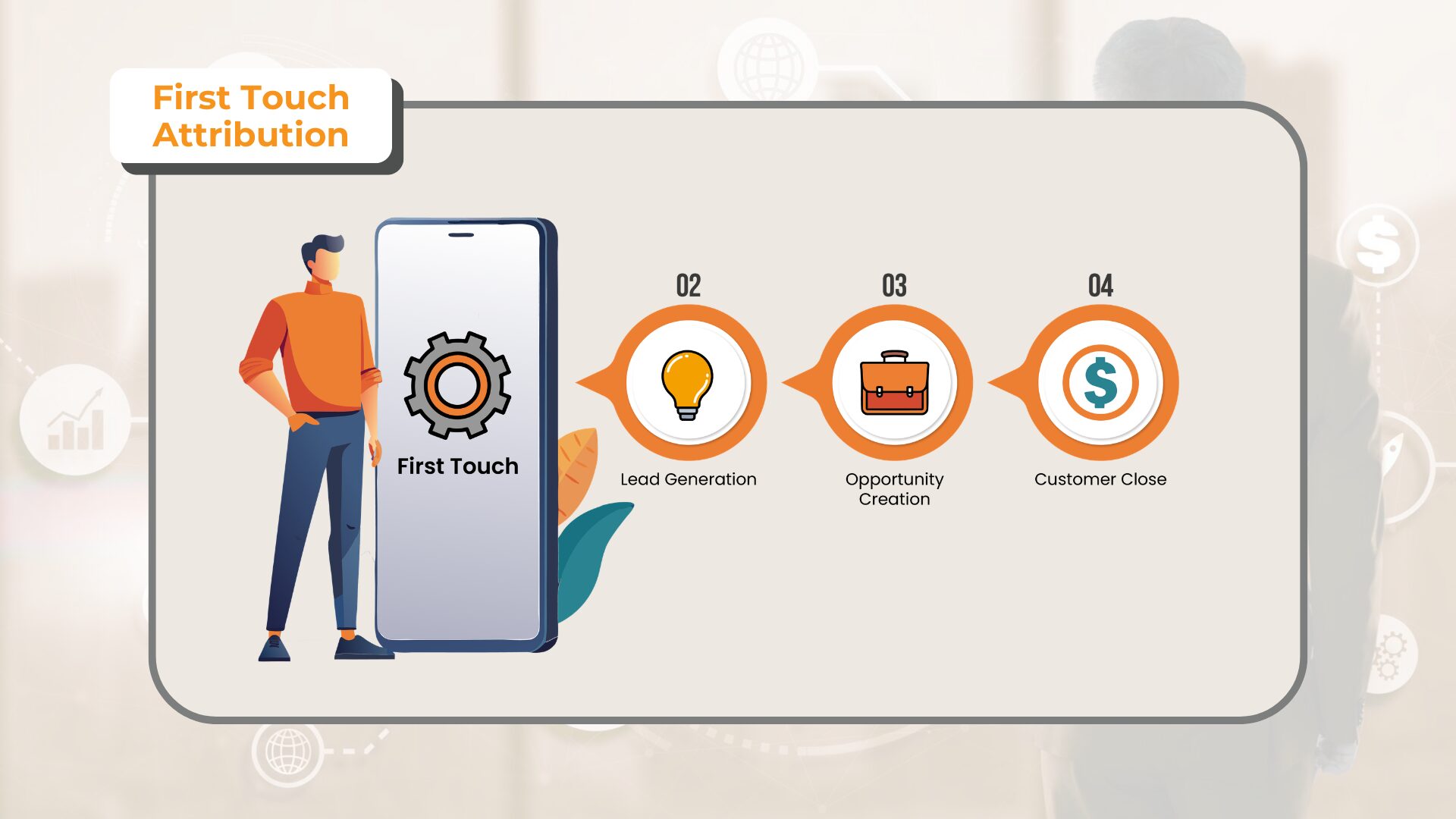
Businesses invest in multiple marketing channels, including Google Ads, organic search, LinkedIn Ads, display ads, and email newsletters, to drive customer acquisition and guide prospects through the sales funnel. Measuring which marketing campaign contributes to results requires accurate marketing attribution, supported by reliable analytics tools and a defined marketing attribution model.
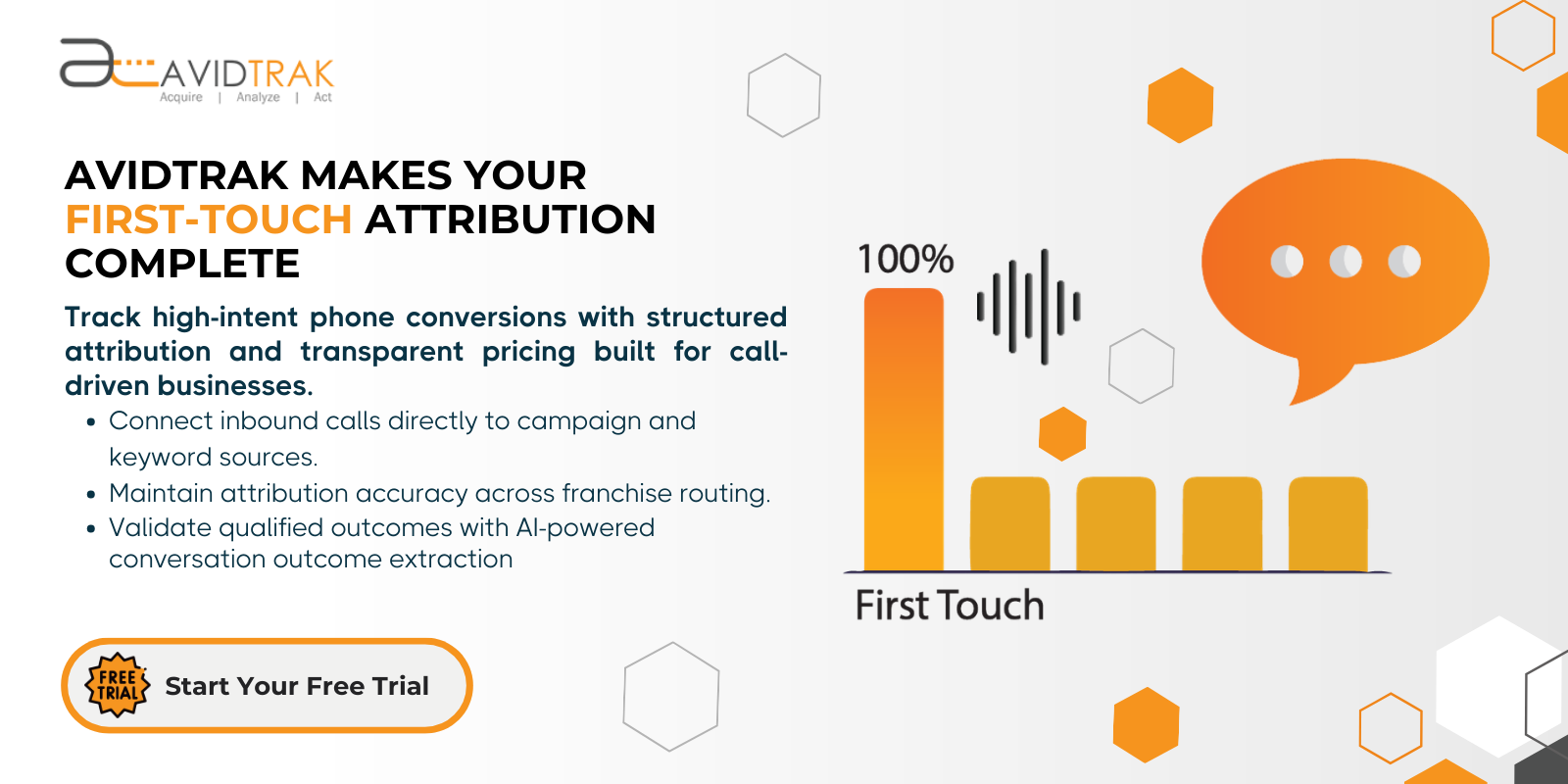
Among common attribution models, first-touch attribution, also known as first-click attribution, represents a form of single-touch attribution. In a first-touch attribution model, 100% of the conversion credit is assigned to the first recorded digital interaction in the customer journey, whether that interaction began with a Google search ad, a piece of content marketing, or another source across digital channels.
While this structure helps evaluate brand awareness, accurate traffic attribution becomes more complex when conversions occur through phone calls. Without structured call tracking, dynamic number insertion, CRM system integration, and tools such as AI-powered transcription and AI-powered conversation outcome extraction, portions of marketing performance data may not be linked back to the original interaction within the broader performance reporting frameworks.
This article explains how first-touch attribution works, where it fits within broader attribution modeling, how it compares to last-touch attribution and multi-touch attribution, and how complete phone conversion tracking supports more accurate marketing measurement model reporting.
What Is First-Touch Attribution?
First-touch attribution is a marketing attribution model that assigns full conversion credit to the first recorded interaction a prospect has with a business. Within broader attribution models, this method focuses solely on the initial trigger that initiates the customer journey, regardless of how many subsequent customer actions occur before a sale.
The first interaction may come from a Google Ads click, an organic search visit that appears in a search result, a Facebook ad, a whitepaper download ad, or another entry point across digital channels.
Under the first-touch attribution model, the first source receives 100% of the credit, even if the prospect returns later via other marketing channels before completing the conversion.
Step-by-Step: How First-Touch Attribution Works
The mechanics behind first-touch attribution follow a structured sequence within common attribution models and standard analytics tools. The model records the first interaction in the customer journey and locks that source as the channel that will receive the final conversion credit.
Step 1:
A prospect first discovers a brand through a marketing channel, such as a paid search ad, a Facebook ad, or a blog article shared via content marketing.
Step 2:
That initial visit is recorded using UTM tracking, tracking URLs, or first-touch UTM tracking inside platforms such as Google Analytics or other analytics tools.
Step 3:
The prospect returns later via another channel, such as retargeting campaigns, email newsletters, or direct traffic.
Step 4:
A conversion occurs, which may include a purchase, form submission, or phone call.
Step 5:
Reporting assigns the full credit to the original source recorded in Step 1, even if later interactions influenced the outcome.
This structure explains why the first recorded touchpoint continues to receive credit, regardless of how many additional channels participate before the final conversion.
How the First-Touch Attribution Model Assigns Conversion Credit
Consider a company investing in cross-channel marketing that includes LinkedIn Ads, display ads, and email outreach. A prospect first interacts with a sponsored post, visits the website, and leaves. Over time, the same prospect returns through direct visits, reviews product information, and later calls the sales team after researching service details.
Under first-touch attribution, the first recorded interaction receives full conversion credit, even if subsequent customer actions contributed to the final decision. Most analytics tools will attribute the conversion entirely to that initial channel within the configured lookback window.
For call-driven organizations, this creates a reporting challenge. Without structured call tracking and CRM integration, phone conversions may not align with the original interaction, affecting the accuracy of the broader marketing measurement model.
Advantages of First-Touch Attribution
First-touch attribution provides a focused way to evaluate early engagement within broader attribution models. It isolates the first interaction that initiates demand, offering clarity in performance analysis.
- Highlights awareness drivers
The first-click attribution model identifies which marketing channels generate initial interest and drive brand awareness at the top of the funnel. - Clarifies early-stage impact
By assigning full credit to the first recorded interaction, digital marketers can assess which campaigns contribute to early customer acquisition within a defined lookback window. - Simplifies reporting logic
As a single-touch attribution method, it avoids the complexity of multi-touch models, making reporting easier across common analytics tools. - Supports longer sales cycles
In extended sales cycles, this marketing attribution model identifies the first exposure that initiated program engagement.
Limitations of First-Touch Attribution
Despite its simplicity, first-touch attribution does not fully reflect the behavior of modern cross-channel marketing.
- Excludes mid-funnel interactions
Later customer actions, including email engagement or repeated site visits, are not reflected in the final attribution report. - Disregards remarketing influence
Retargeting campaigns and repeated exposure across digital channels do not receive measurable credit under this model. - Overemphasizes awareness channels
Channels that introduce users may appear stronger than those that guide prospects deeper into the sales funnel. - Undervalues high-intent closing activity
Interactions that occur closer to conversion, including follow-up visits or offline activities, may not be recognized. - Often disconnects phone conversions
Without dynamic number insertion and call tracking, phone-based conversions may not align with the first recorded interaction, creating gaps in attribution reporting.
Without structured call tracking, phone conversions remain disconnected from the first recorded interaction, creating gaps in marketing attribution reporting.
Why Phone Call Attribution Breaks Most First-Touch Models
Many businesses evaluate conversions through online forms, yet in call-driven industries, phone inquiries represent the highest-intent actions. When first-touch attribution is applied without call tracking, attribution gaps appear immediately.
A static phone number displayed across all digital channels cannot identify which marketing channel initiated the call. Without dynamic number insertion, the original interaction captured through UTM tracking does not connect to the inbound phone conversion.
Reporting becomes further distorted when repeat callers are counted multiple times inside analytics tools without validation through caller ID filtering or connected CRM systems.
For businesses that depend on inbound calls, accurate traffic attribution requires structured call tracking aligned with the broader marketing attribution model.
How to Track First-Touch Attribution for Phone Calls
When a conversion occurs through a phone call, the integrity of first-touch attribution depends on whether that call can be linked back to the original source. AvidTrak is built specifically to close this gap by connecting inbound calls to campaign-, keyword-, and source-level data within a structured marketing attribution model.
Unlike systems that treat phone activity separately from web analytics, AvidTrak aligns call data with session data, campaign parameters, and connected CRM systems. This allows phone-based conversions to be measured within the same attribution models used for digital reporting.
Use Dynamic Number Insertion (DNI)
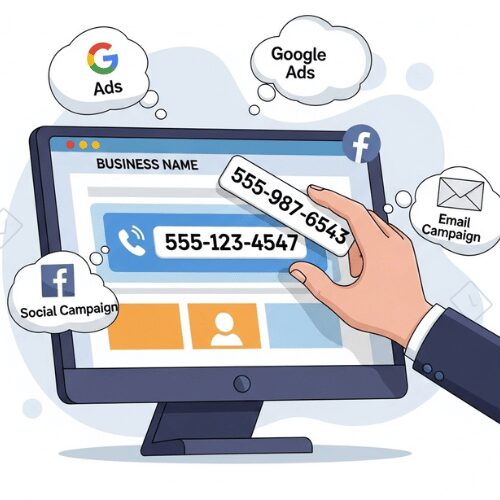
With dynamic number insertion, AvidTrak assigns unique tracking numbers based on the visitor’s entry source.
Each session receives a number tied to its UTM tracking parameters, allowing the inbound call to inherit the correct campaign data. This approach maintains accurate traffic attribution even when prospects return multiple times before making a call.
Integrate with Google Ads & GA4
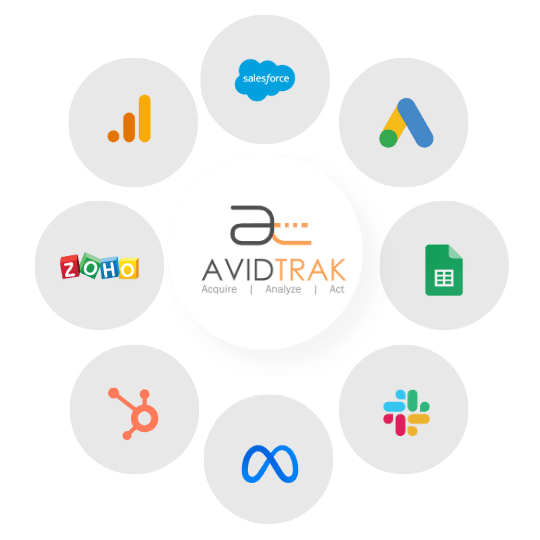
AvidTrak integrates directly with Google Ads and Google Analytics (GA4), allowing inbound calls to be recorded as structured conversion events within existing attribution models. Calls can be filtered by duration thresholds and caller uniqueness to reduce accidental dials and duplicate activity, improving campaign-level reporting accuracy.
Use AI-Powered Transcription & Conversation Outcome Extraction
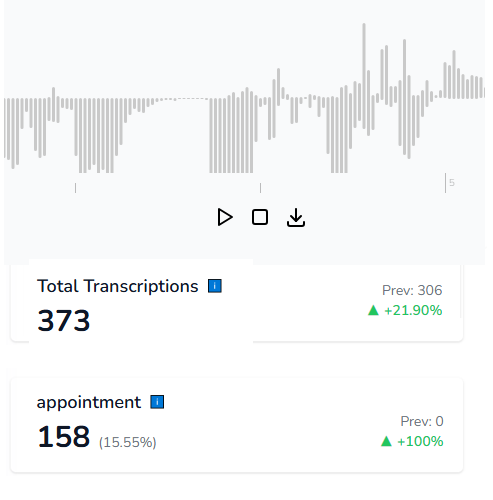
AI-powered transcription converts recorded calls into searchable text, allowing teams to review conversation content without listening to full recordings. This adds clarity to phone-based conversions inside the broader marketing attribution model.
AvidTrak’s AI-powered conversation outcome extraction analyzes call content and tags defined triggers such as booking confirmations, pricing discussions, support needs, or service scheduling. Instead of counting every call equally, attribution reflects validated conversion activity, allowing the first-touch attribution model to connect original source data with meaningful phone outcomes.
First-Touch vs Last-Touch vs Multi-Touch Attribution
| Model | How Credit Is Assigned | Best Use Case | Limitation |
| First-Touch Attribution | 100% of the conversion is assigned to the first recorded interaction. | Measuring brand awareness and early-stage acquisition impact. | Does not account for later interactions that influenced the conversion. |
| Last-Touch Attribution | 100% of the conversion is assigned to the final interaction before the conversion event. | Evaluating bottom-of-funnel performance and closing channels. | Does not reflect the initial source that introduced the prospect. |
| Multi-Touch Attribution | Conversion value is distributed across multiple interactions using predefined rules (e.g., linear, position-based, time-decay weighting). | Analyzing influence across complex cross-channel marketing strategies. | Requires consistent tracking across channels and more advanced configuration. |
When First-Touch Attribution Is Most Effective
First-touch attribution works best when the primary goal is to identify what initiated demand rather than what closed it.
- Brand awareness campaigns where the objective is to measure which channel introduced new audiences.
- New product launches where early exposure is the key performance indicator.
- Long sales cycles where the first interaction sets the direction for future engagement.
- Enterprise B2B environments where initial discovery often drives extended evaluation processes.
- Educational institutions that rely on early inquiry generation before enrollment.
- Legal services, where the first point of contact often determines the consultation flow.
In these scenarios, understanding the origin of demand is more valuable than distributing credit across later interactions.
When First-Touch Attribution Can Be Misleading
First-touch attribution becomes less reliable when multiple interactions significantly influence the final outcome.
- Retargeting-heavy campaigns where repeated exposure plays a decisive role.
- High repeat visitors who return through several marketing channels before converting.
- Multi-channel strategies where both awareness and closing tactics contribute to results.
- Franchise marketing where location routing and localized campaigns affect outcomes.
- Call-driven businesses where the final phone interaction carries strong intent and measurable value.
In these situations, relying solely on the initial interaction may provide only a partial view of the full conversion path.
Advanced Attribution for Call-Driven Businesses
For organizations where inbound calls drive revenue, attribution must extend beyond website sessions. AvidTrak delivers structured call tracking that connects phone activity directly to campaign data, keyword sources, and verified business outcomes inside a unified marketing attribution model.
Campaign-Level and Keyword-Level Precision
AvidTrak provides campaign-level and keyword-level call tracking, linking each inbound call to the exact paid search term, display placement, or referral source that initiated the engagement. This allows clear validation of individual marketing campaigns rather than relying on generalized channel reporting.
CRM-Connected Closed-Loop Attribution
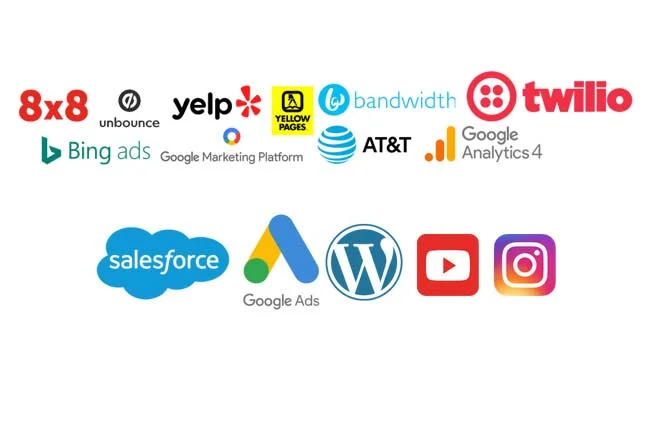
Through integration with leading CRM systems such as Salesforce, HubSpot, and Zoho CRM, AvidTrak links inbound calls to pipeline progression, deal status, and recorded revenue. This supports structured closed-loop attribution, allowing businesses to evaluate how initial touchpoints translate into confirmed sales outcomes rather than stopping at the call event.
Advanced Routing Intelligence for Multi-Location and Franchise Systems
AvidTrak’s zip code routing and area code routing assign calls to the appropriate territory while preserving campaign-level attribution data. Operational controls such as call whisper, sequential call forwarding, and simultaneous call forwarding improve response handling without compromising source visibility.
In call-driven environments, AvidTrak unifies routing control, source-level tracking, and outcome validation, allowing businesses to confirm which campaigns and keywords generate measurable phone conversions tied to real sales activity.
Step-by-Step: Implementing First-Touch Attribution with Call Tracking
Implementing first-touch attribution for phone conversions requires precise source tracking and structured reporting. AvidTrak provides the configuration controls needed to align call data with a defined marketing attribution model.
Step 1: Define the Attribution Model
Set first-touch attribution as the reporting framework in connected analytics tools, and confirm that the lookback window reflects the expected sales cycle.
Step 2: Assign Campaign and Keyword Tracking Numbers
Assign campaign-level and keyword-level tracking numbers so inbound calls can be directly tied to specific marketing channels and paid search terms.
Step 3: Deploy Dynamic Number Insertion
Install dynamic number insertion to display source-based tracking numbers using UTM tracking parameters and tracking URLs.
Step 4: Connect Google Ads and GA4
Integrate Google Ads and Google Analytics (GA4) so validated inbound calls are recorded as structured conversion events inside selected attribution models.
Step 5: Configure Call Qualification Rules
Apply duration thresholds and caller uniqueness filters to distinguish qualified calls from misdials or repeat activity.
Step 6: Activate Outcome-Based Validation
Enable AI-powered conversation outcome extraction to tag measurable triggers such as bookings or pricing confirmations, so reported conversions reflect actual business outcomes.
Step 7: Review Attribution Reports
Analyze campaign-level and keyword-level call data regularly to adjust bidding, budget allocation, and channel strategy based on verified conversion activity.
Conclusion: Why AvidTrak Is a Cost-Effective Attribution Platform
Accurate first-touch attribution depends on source-level precision. When phone calls influence the sales process, attribution remains reliable only if inbound calls, campaign parameters, and verified outcomes are recorded inside a unified attribution platform.
AvidTrak combines transparent pricing, more than 14 years of domain expertise, and direct product support to ensure attribution is configured correctly from the outset. Businesses that implement straightforward marketing attribution gain a low-cost solution with no hidden fees.
Organizations managing franchise routing, cross-channel reporting, or built-in contact center operations require structured campaign tracking across every inbound call.
With zip code routing, AI-powered conversation outcome extraction, and direct integration with Google Ads, Google Analytics (GA4), and established CRM systems, AvidTrak connects phone conversions to the marketing source that initiated them.
Sign up for a free trial and configure first-touch attribution, whether the goal is basic single-touch attribution reporting or structured validation across complex call-driven sales environments.
Frequently Asked Questions
1. What is first-touch attribution?
First-touch attribution is a marketing attribution model that assigns 100% of conversion credit to the first recorded interaction a prospect has with a business. Often referred to as first-click attribution, it measures which source first introduces a prospect to the sales funnel.
2. How does first-touch attribution work?
Under single-touch attribution, the earliest tracked interaction is stored using UTM parameters or tracking IDs. When a conversion occurs later, reporting assigns full credit to that original source within the configured lookback window, regardless of later touchpoints.
3. What is the difference between first-touch and last-touch attribution?
First-touch attribution credits the first interaction that generated awareness. Last-touch attribution assigns credit to the final interaction before conversion. The first model focuses on awareness performance, while the last emphasizes closing-stage influence within the sales process.
4. Is first-touch attribution accurate?
The first-touch attribution model is accurate for evaluating awareness and demand generation. Accuracy improves when phone calls, repeat callers, and validated outcomes are tracked alongside digital sessions rather than relying only on form submissions or basic web analytics.
5. How do you track phone calls in first-touch attribution?
Phone calls are tracked using campaign-based numbers and dynamic number insertion, which links inbound calls to the original traffic source. AvidTrak reports calls into Google Ads and Google Analytics (GA4), so phone conversions are included within the selected attribution framework.
6. What is dynamic number insertion?
Dynamic number insertion replaces the phone number shown on a webpage based on the visitor’s traffic source. This allows businesses to connect inbound calls to specific campaigns, keywords, and marketing channels for accurate source-level reporting.
7. How does AI-powered transcription improve attribution?
AI-powered transcription converts recorded calls into searchable text, while AI-powered conversation outcome extraction flags measurable triggers such as bookings or pricing confirmations. This helps distinguish qualified conversions from general inquiries inside attribution reports.
8. Should I use first-touch or multi-touch attribution?
Use first-touch attribution or single-touch attribution when measuring awareness performance or testing new campaigns. Use multi-touch attribution when several interactions meaningfully influence the final outcome, and budget decisions require shared conversion credit across channels.


