


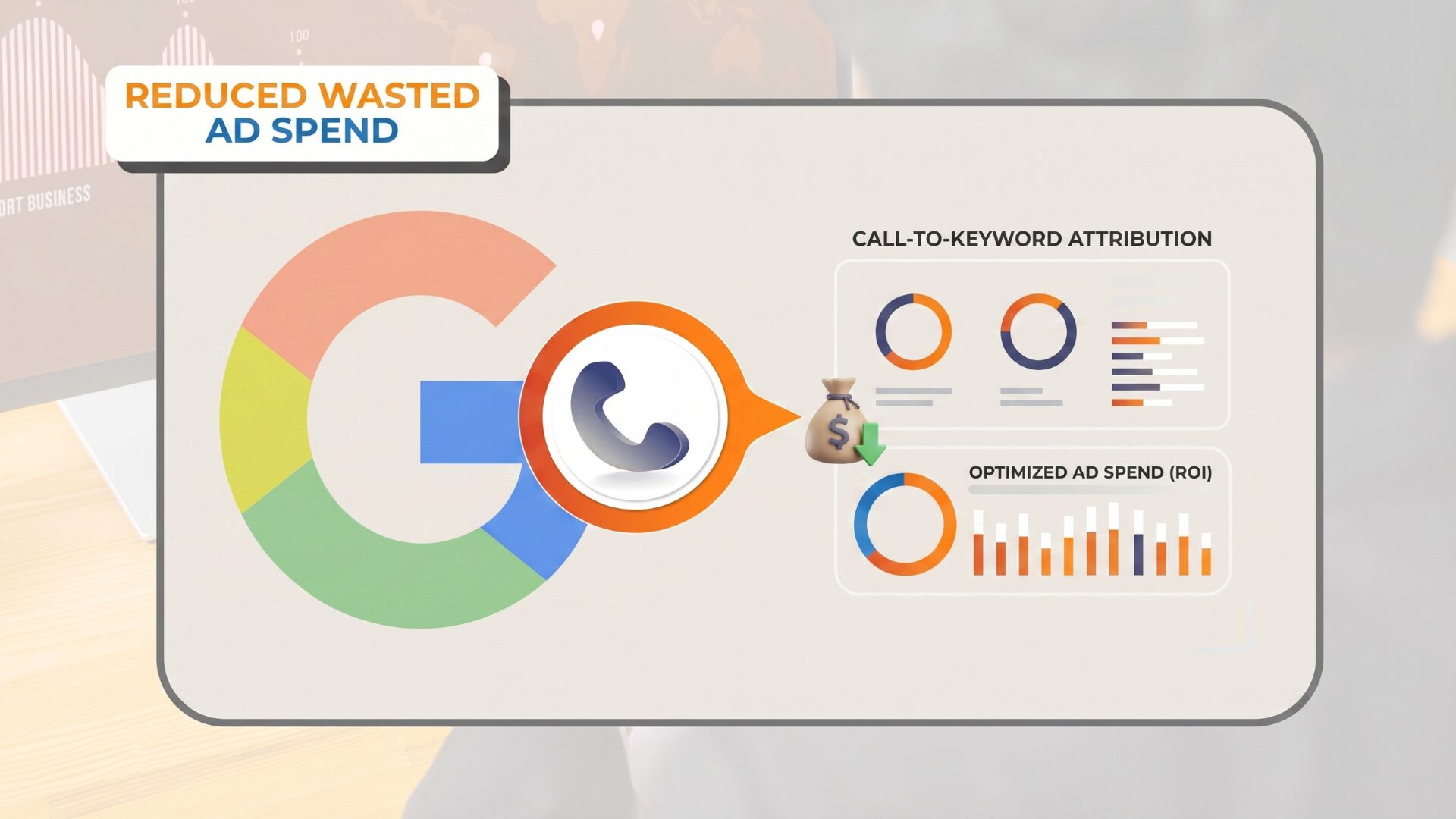
A business can spend heavily on digital ads, generate a healthy number of calls, and still waste a meaningful part of its budget.
That happens when the business cannot see which ads are driving good calls, which calls are being missed, and which ones are never turning into real sales outcomes.
That is why call tracking matters so much in ad management. It helps businesses connect ad spend to phone leads, separate high-value calls from low-value ones, and find the gaps where money is leaking.
Call tracking reduces wasted ad spend by showing which campaigns drive qualified calls, identifying missed or low-quality leads, and connecting phone conversations to real outcomes such as appointments or sales. This helps businesses shift budget toward high-performing campaigns and reduce spend on low-value activity.
In many cases, wasted ad spend is not caused by the ad alone. It is caused by poor visibility after the click.
Call tracking fixes exactly that.
What Wasted Ad Spend Really Looks Like
Most people think wasted ad spend comes from the wrong keywords or poor targeting. That is part of the problem, but it is not where most budget is lost.
In reality, waste often happens after the click, when paid leads are not handled properly.
Wasted ad spend can show up as:
- high-intent calls going unanswered during busy hours
- budget lost on spam, wrong numbers, or irrelevant inquiries
- calls that do not match the service area or offering
- leads routed to the wrong team or location
- campaigns generating call volume but weak booking or sales outcomes
- qualified callers dropping off due to poor handling or slow follow-up
- broad targeting bringing in low-fit or price-shopping inquiries
Without clear call tracking, these gaps are hard to detect and even harder to fix.
Why Ad Platforms Alone do Not Solve this Problem
Ad platforms are designed to measure activity up to the point of the click. They can show impressions, clicks, and even when a user taps a call button.
But they do not show what actually happens once the phone rings.
A campaign may look strong based on traffic and engagement, yet still underperform from a business standpoint. Without visibility into the call itself, there is no clear way to determine whether that interaction became a real opportunity. This creates a blind spot.
Teams cannot see if calls are being missed, if callers are a good fit, or if conversations are moving toward appointments or sales. As a result, campaigns may continue to receive budget even when they are producing weak outcomes.
This is where call tracking platforms become essential.
They extend measurement beyond the click and into the conversation, showing how calls are handled, which ones are qualified, and how they contribute to actual business results.
1. Call Tracking Shows Which Campaigns are Actually Producing Calls
The first way call tracking reduces wasted ad spend is by showing which campaigns are driving call demand in the first place.
This matters because not every campaign creates the same level of phone intent. One campaign may bring traffic that reads and leaves. Another may bring people who call right away.
Why this reduces waste
Once the business sees which campaigns are creating phone leads, it can stop overvaluing campaigns that look active but do not create real contact.
Example
A legal services firm may see that one paid search campaign generates fewer clicks but many consultation calls, while another creates cheaper traffic with almost no serious calls. Budget can then move toward the stronger campaign.
2. It Helps Identify Which Calls are Worth Paying For
Not every call should be treated as a successful lead.
Call tracking helps separate qualified calls from noise such as spam, wrong numbers, existing customer requests, and low-intent inquiries. Without this filtering, campaigns may appear effective simply because they generate high call volume.
Why this reduces waste
Ad teams stop optimizing for total calls and focus on qualified phone leads, booked appointments, and revenue-driving conversations.
Example
A home services business may find that one ad group generates a large number of calls, but many are outside the service area or unrelated to the offered service. Another ad group may drive fewer calls but much better booked-job outcomes. That changes where spend should go.
3. Call tracking reveals missed calls that waste good ad spend
Missed phone calls waste ad spend because businesses pay for high-intent phone leads that never connect or receive follow-up. Call tracking helps identify missed, unanswered, and after-hours calls, allowing teams to recover lost opportunities and improve lead handling.
A business can pay to generate a high-intent phone lead and still lose it if the call is missed.
From a marketing perspective, that is a direct budget loss.
Without phone call tracking, teams often cannot see how many ad-driven calls go unanswered, reach voicemail, or receive delayed follow-up.
Why this matters
Missed calls break the connection between marketing spend and lead conversion. Campaigns may look strong, but a portion of paid leads is never given a chance to convert.
What to track
- missed call rate
- answer rate
- voicemail rate
- after-hours call volume
- callback response time
Example
A clinic may spend heavily on treatment campaigns that produce strong call demand, but if the front desk misses a noticeable share of calls during peak hours, part of the ad budget is being wasted after the click, not before it.
4. Call Tracking Identifies High-Performing Keywords & Reduces Spend on Low-Quality Search Terms
Some keywords generate high call volume but low-quality leads. Others generate fewer calls but stronger intent.
Call tracking connects calls to keywords and campaigns, making it easier to see which terms drive qualified phone leads and which ones create noise.
Platforms such as AvidTrak make this clearer by linking each call to its keyword, campaign, and outcome, helping teams focus on terms that generate real business value.
Why this reduces waste
It helps cut spending on keywords that generate irrelevant calls and shift the budget toward terms that drive conversion-ready conversations and better lead outcomes.
Example
An insurance agency may find that broad comparison keywords create many phone calls but poor close quality, while local policy-specific terms drive fewer but stronger quote-ready callers.
That insight makes keyword pruning more precise.
5. See Which Landing Pages Generate High-Quality Phone Leads
Landing pages influence not just whether users call, but the type and quality of calls they generate.
One page may drive a high number of calls by being too broad. Another may drive fewer calls but set better expectations and attract stronger-fit prospects. Call tracking links calls to landing pages, showing which pages drive qualified leads vs low-intent inquiries.
Why this reduces waste
It helps shift spend toward landing pages that generate high-quality calls, appointments, and revenue, not just traffic or call volume.
Example
A med spa may compare two landing pages. One creates lots of call volume from a discount offer, but weak booking quality. Another produces fewer calls but stronger consultation intent. Call tracking helps the business invest in the page that supports better revenue outcomes.
6. Call Tracking Separates Branded vs Non-Branded Calls
Branded and non-branded calls perform very differently, but without call tracking, they often get mixed together.
Call tracking separates calls from branded search vs non-branded campaigns, giving a clearer view of true acquisition performance.
Why this reduces waste
It prevents overvaluing branded traffic and ensures the budget is allocated toward campaigns that generate new customer calls, not just existing demand.
Example
A dealership may see high call volume from branded search and assume its broader campaigns are just as strong. Call tracking can separate those paths and show where real new-customer demand is coming from.
7. Improved Ad Budget Allocation by Location
Multi-location businesses often waste ad spend by applying the same budget across all markets without understanding how each location performs.
Call tracking connects phone leads to specific locations, enabling comparison of how different markets convert campaign traffic, including mobile ads and local search.
Why this reduces waste
Budget shifts toward locations that generate qualified calls, booked appointments, and stronger outcomes, while underperforming locations are identified for operational fixes, such as missed calls or slow response.
What to track
- calls by location
- qualified calls by market
- answer rate by branch
- missed calls by region
- call-to-appointment rate
Example
A healthcare group may find one clinic converts treatment inquiries well, while another misses a higher share of calls during peak hours. Budget can be redirected to the stronger location while improving call handling in the weaker one.
8. Call Tracking Identifies After-Hours Call Loss from Ads
Missed after-hours calls from campaigns and mobile ads can result in lost high-intent leads and wasted ad spend. Call tracking helps identify when calls occur, how many go unanswered, and where follow-up breaks down.
Many businesses run ads throughout the day, but their teams are not available to handle calls at all hours.
This creates a gap where high-intent calls, especially from mobile ads, go unanswered, even though the business has already paid to generate them.
Why this matters
Tracking after-hours call activity helps businesses adjust campaign timing, improve routing, and ensure that paid leads are not lost due to availability gaps.
AvidTrak helps you analyze when calls happen, which ones are missed, and how they are handled, allowing teams to improve response without guessing.
Better approach
Track after-hours calls separately and decide whether to:
- limit schedule windows
- improve routing
- use voicemail logic more carefully
- use an AI receptionist or after-hours handling process
- create faster callback workflows
Example
An urgent home repair business may receive a large share of calls after hours from mobile ads. Without proper handling, those leads are lost. With tracking, the business can adjust routing or follow up to recover those opportunities.
9. Cost Per Call vs Cost Per Qualified Call
Cost per call can be misleading because it treats all calls equally. Call tracking helps measure cost per qualified call, appointment, or sale, allowing businesses to reduce wasted ad spend by focusing only on calls that lead to real outcomes.
10. Call Tracking Connects Ad Spend to Revenue
Call tracking connects phone calls to CRM stages and sales outcomes, showing which campaigns generate real business value.
Instead of measuring only call volume, businesses can track:
- qualified leads
- appointments
- opportunities
- closed sales
Why this reduces waste
The business stops funding campaigns that only create surface activity and starts funding multi-channel marketing campaigns that move leads deeper into the sales process.
Example
A B2B services company may find that one paid search campaign creates fewer calls but much more pipeline, while another creates more calls that rarely qualify. The lower-volume campaign may deserve more spend.
11. Make Better Campaign Optimization Decisions
Call tracking improves how teams evaluate campaigns by adding call quality and outcomes to standard metrics.
Instead of optimizing for clicks or conversions alone, teams can measure:
- which campaigns drive qualified calls
- which keywords generate appointment-ready leads
- which landing pages produce strong call outcomes
Why this reduces waste
It ensures optimization decisions are based on lead quality and conversion potential, not just surface metrics.
Practical Example
A home services business runs campaigns across plumbing, HVAC, and electrical services.
At first, performance looks like:
- plumbing drives the most calls
- HVAC drives fewer calls
- electrical has the lowest cost per call
With call tracking, the business sees:
- many plumbing calls are missed after hours
- HVAC calls convert at a higher rate
- some electrical keywords bring poor-fit inquiries
- certain locations handle calls better than others
Ad spend is then adjusted based on call quality, handling, and outcomes, not just volume.
What Businesses Should Track to Reduce Waste
To reduce wasted ad spend, businesses should track call volume, call quality, missed calls, and revenue outcomes by campaign, keyword, and landing page. This helps identify which ads generate qualified phone leads and which ones waste budget.
A useful call tracking setup should focus on four areas:
- Call volume and source that shows which marketing channels and mobile ads generate demand
- Call quality and intent
- qualified calls
- spam or irrelevant calls
- service-fit inquiries
It separates high-value leads from low-quality traffic.
- Call handling performance identifies where paid leads are being lost after the click:
- answered vs missed calls
- after-hours call volume
- callback response time
- Business outcomes
- cost per qualified call
- call-to-appointment rate
- call-to-sale rate
- revenue by campaign
AvidTrak ties all of this together by linking each call to its source, applying AI-powered transcription and conversation outcome extraction to identify intent, and showing which campaigns lead to appointments, opportunities, and revenue.
These metrics make it clear where the budget is creating value and where it is being wasted.
FAQs
Does call tracking always reduce ad spend?
Call tracking does not always reduce ad spend directly. It reduces wasted spend by identifying poor-performing campaigns, missed calls, and low-quality leads, allowing businesses to reallocate budget toward campaigns that generate qualified calls and stronger outcomes.
What is the biggest source of wasted ad spend in call-driven businesses?
The biggest source of wasted ad spend is paying for calls that are missed, low-quality, or never tied to a business outcome. Without visibility into call handling and outcomes, businesses continue funding campaigns that do not generate real value.
How does AvidTrak help reduce wasted ad spend?
AvidTrak helps reduce wasted ad spend by tracking calls back to campaigns, keywords, and landing pages, identifying qualified calls, and showing missed or low-value leads. Its AI-powered transcription and conversation outcome extraction highlight which calls lead to real business outcomes.
Can call tracking improve local ad performance?
Call tracking improves local ad performance by showing how different locations handle calls, including answer rates, missed calls, and outcomes. This helps businesses allocate budget toward locations that convert better and fix gaps in underperforming markets.
Is call tracking useful only for Google Ads?
Call tracking is not limited to Google Ads. It works across paid search, mobile ads, SEO, social campaigns, and landing pages, helping businesses track phone leads from multiple channels and understand which marketing tactics generate real calls and revenue.
Final thoughts
Call tracking reduces wasted ad spend by exposing what happens after the click. It shows which campaigns generate real calls, which calls are useful, which ones are missed, and which ones move toward revenue.
That is what makes it valuable. A business cannot improve ad efficiency fully if part of the conversion path stays invisible.
Once call tracking is set up properly, the team can stop judging campaigns by surface activity and start making better budget decisions based on real outcomes.


