


Running pay-per-call campaigns but struggling to track which calls turn into qualified leads?
Retreaver offers call attribution and routing, but it may not fit every business’s needs or budget.
Here are 10 of the best Retreaver alternatives worth comparing for call tracking, attribution, integrations, and pricing.
Quick comparison: Retreaver Alternatives
| Platform | Best-fit operation | Replacement scope | Pricing basis |
| AvidTrak | Agencies and lead generators with established buyers | Campaign attribution, call review and destination routing | US/Canada Starter: $15/month with local usage allowances; overages apply |
| Ringba | Networks selling calls through buyer auctions | Network routing, RTB and Ping/Post call trading | RTB/PingPost: custom-priced Enterprise; lower tiers have different scope |
| Phonexa Call Logic | Operators managing calls and web leads | Call distribution and partner financial reporting | Custom quote; included minutes vary by package |
| TrackDrive | Networks with complex buyer eligibility rules | Ping/post, bid-based routing and qualification | Usage-based; optional monthly commitments reduce unit rates |
| CallerReady | Lead-to-call and warm-transfer operations | Automated calling, qualification and multi-buyer auctions | Custom quote |
| CallScaler | Networks connecting buyer revenue to publisher earnings | Auctions, buyer billing and payout accounting | Pay Per Call: $600/month, or $400/month with annual billing, plus usage |
| Invoca | Advertiser-led affiliate programs | Qualified-call attribution, payout assignment and performance routing | Quote-based Performance plans |
| CallTrackingMetrics | Staffed qualification and transfer teams | Attribution and agent operations | Sales Engage: $329/month on monthly billing, plus usage |
| Dialics | Operators monitoring supplier commissions and buyer revenue | Partner attribution and financial visibility | Usage-based; US local numbers $1/month and local inbound calls $0.045/minute |
| CallRail | Marketers with a separate partner billing process | Marketing attribution and call analysis | Subscription plus usage; starting allowances include five numbers and 250 minutes |
The provider sections explain the relevant capabilities and pricing conditions. Attribution tools, agent platforms, and network systems should not be treated as interchangeable.
1. AvidTrak
 Best for: Campaign attribution and call evidence when buyer agreements and partner payments are managed separately.
AvidTrak is a call tracking and attribution platform for marketers, agencies, and lead generators. Its value in a pay-per-call setup is connecting the campaign that produced a call with evidence of what happened during the conversation.
Documented features include keyword-level attribution, call recording, transcription, scoring, and tagging. IVR, area-code and ZIP-code routing, and sequential or simultaneous forwarding support calls sent to established buyer destinations.
For website traffic, Dynamic Number Insertion connects calls with visitor sources. CRM call tracking helps connect phone activity with follow-up and sales outcomes.
Pricing: The Starter package costs $15/month and includes five local numbers, 500 local minutes, and 500 recording minutes. Professional is $30/month; Agency is $55/month. Overages apply, and paid subscriptions require an account deposit.
2. Ringba
 Best for: Pay-per-call networks that need buyer auctions and call trading.
Ringba is a network-oriented alternative for businesses whose call revenue depends on buyer selection and distribution. Its pricing separates general tracking from more advanced network functions.
Professional includes Ring Trees, predictive routing based on expected revenue per call, revenue recovery, and white labeling. Enterprise adds real-time bidding and Ping/Post call trading.
That distinction is useful when a network needs more than the highest raw bid. Expected revenue per call and recovery behavior can affect the value of a route.
Pricing: Business costs $147/month and Professional costs $297/month on monthly billing. Enterprise is custom-priced. Numbers, minutes, recordings, transcription, and other services carry separate charges; annual billing has lower monthly equivalents.
3. Phonexa Call Logic
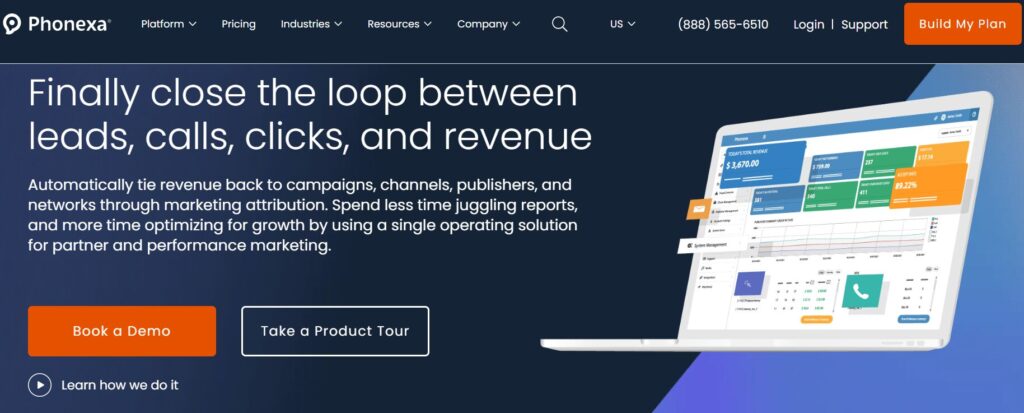 Best for: Lead operators that need call distribution and detailed partner financial reporting, especially alongside web leads.
Call Logic is Phonexa’s inbound call tracking and distribution product. It supports buyer caps, Ping Post Calls 2.0, and reporting for publisher payouts, buyer revenue, administrative commissions, and referral payments.
Its reporting is relevant when several parties have a financial interest in the same call. Operators can inspect source-level and call-level acceptance and rejection activity alongside the associated revenue records.
Phonexa also offers LMS Sync for web-lead buying and selling. That relationship matters when calls and form leads belong to the same lead operation rather than separate systems.
Pricing: Phonexa requests a custom quote. Call Logic packages include minutes, with allowances varying by package. The pricing page lists RTB, an IVR builder, recording, and managed configuration support.
4. TrackDrive
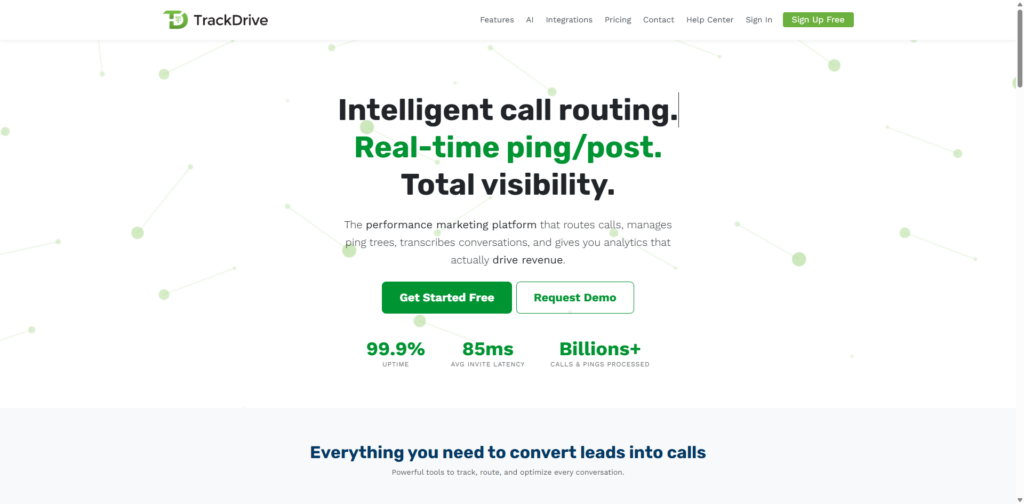 Best for: Networks where buyer eligibility, capacity, and routing logic determine which calls can be sold.
TrackDrive checks buyers against hours, caps, geography, filters, and duplicate rules. Routing can use bids, priority, or earnings per call, with static buyers and live webhook bidders participating in the same auction.
This makes it relevant when “highest bid” is only one part of the decision. A buyer also needs to be eligible and able to accept the call.
TrackDrive supports qualification questions and agent transfers, so a network can evaluate caller suitability before connecting the selected buyer.
Pricing: TrackDrive publishes pay-as-you-go rates and discounts tied to monthly commitments. For example, the pay-as-you-go rate is $0.12 per 1,000 unique pings, with posts billed at the same rate. Telephone usage, automation actions, transcription, and extended recording retention are separate cost components.
5. CallerReady
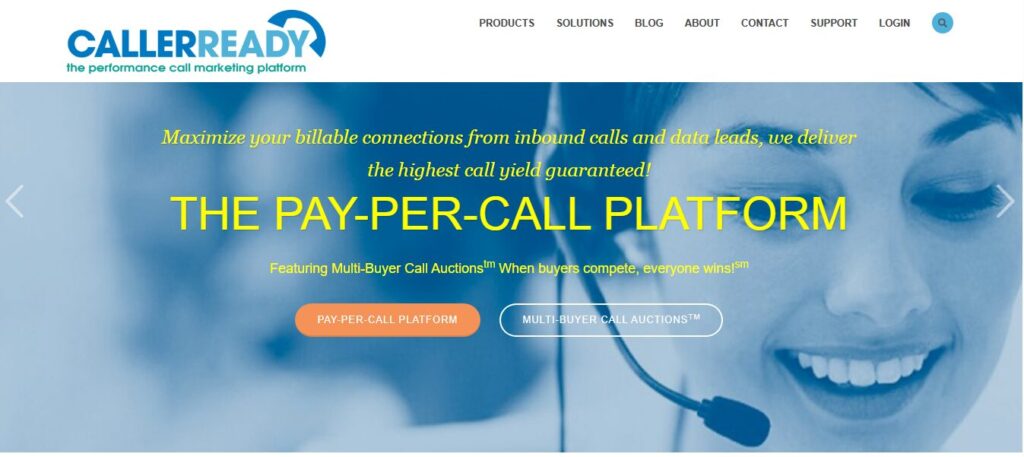 Best for: Operations that convert web leads into calls or use agents to qualify callers before a buyer transfer.
CallerReady combines lead-to-call automation, Dynamic Call Distribution, and Multi-Buyer Call Auction technology. Its platform also includes an agent qualification and transfer CRM, affiliate and advertiser logins, and order management.
Its fit is clearest when the process starts before an inbound buyer connection. A web lead may need contact, an agent may need to confirm eligibility, and the resulting call may then be offered or transferred to a buyer.
For that model, an inbound tracking dashboard alone would leave part of the operation elsewhere. CallerReady brings the contact and qualification stages into the comparison.
Pricing: The official pricing page requests a custom quote.
6. CallScaler
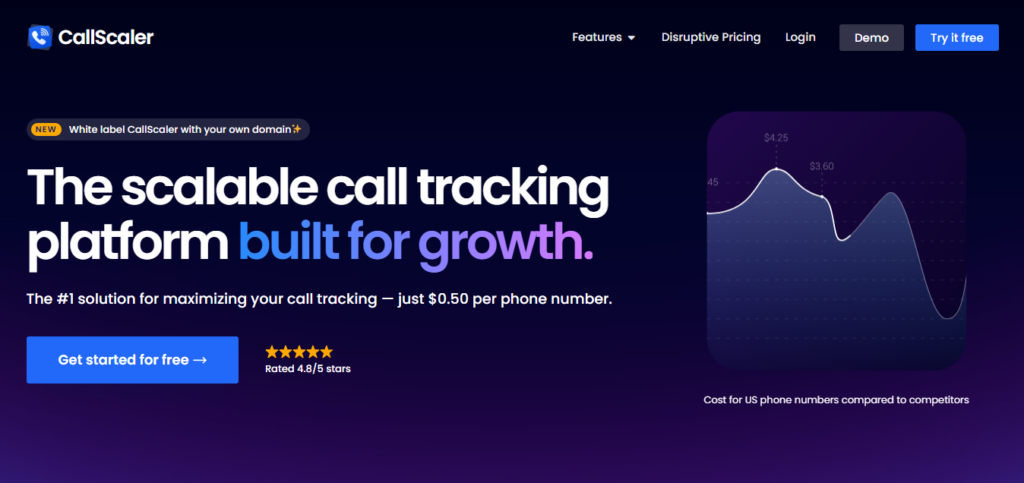 Best for: Networks that want buyer auctions and publisher earnings tied to reported buyer revenue.
CallScaler’s Pay Per Call product includes buyer and publisher management, RTB, ping/post routing, prepaid buyer balances, and payout tools.
Dynamic Payout Sync is particularly relevant to attribution. A buyer webhook reports revenue against a call reference; CallScaler matches it to the call, applies the configured network margin, and credits the publisher. This links partner earnings to reported buyer revenue rather than a fixed rate alone.
Its release notes also describe a publisher minimum-duration setting while buyers remain charged under their own terms. That distinction matters when buyer billing and publisher qualification differ.
Pricing: Pay Per Call costs $600/month, or $400/month with annual billing, plus usage. RTB, white labeling, and unlimited businesses and users are included in that plan.
7. Invoca
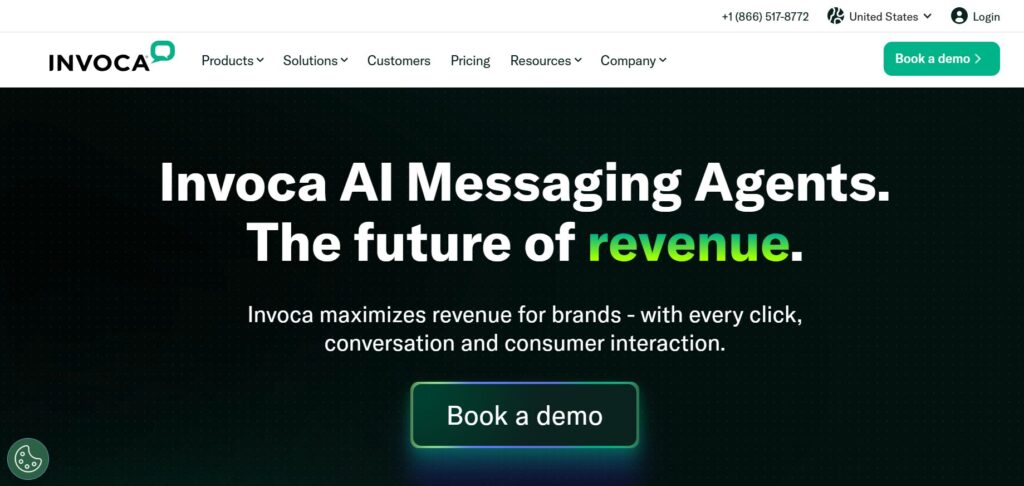 Best for: Advertisers managing affiliate programs around qualified calls and conversions.
Invoca offers Performance plans for pay-per-call and affiliate marketing.
Performance Professional includes campaign syndication and bundling, payout assignment for qualified calls and conversions, APIs, webhooks, and conversion or revenue imports. Performance Enterprise adds dynamic routing with real-time webhooks, advanced IVR, and call whisper.
That makes Invoca relevant when the advertiser needs to connect partner-generated calls with qualification decisions and business outcomes.
Pricing: Performance Professional and Performance Enterprise are quote-based.
8. CallTrackingMetrics
 Best for: Teams whose agents qualify and transfer callers as part of the pay-per-call operation.
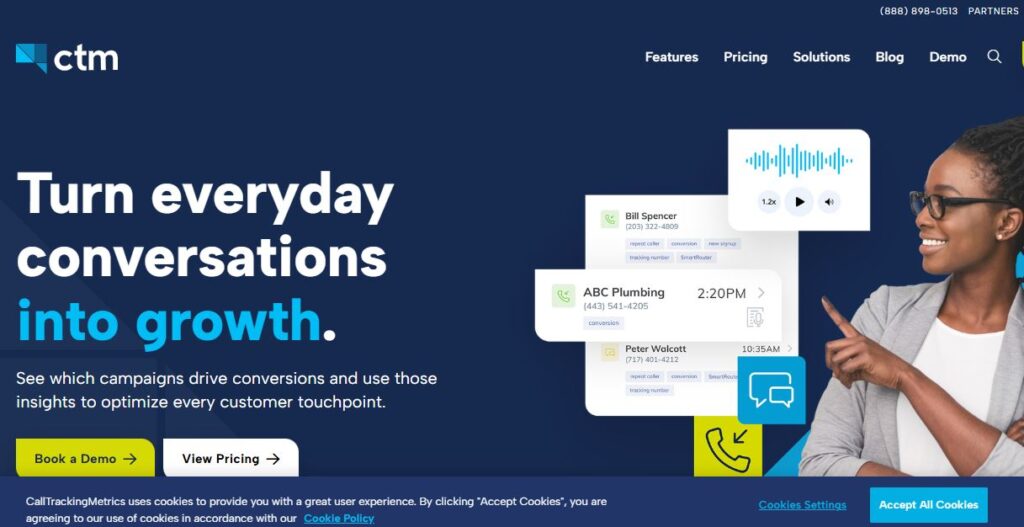
CallTrackingMetrics, or CTM, combines marketing attribution with call handling. Marketing Lite provides source attribution, recordings, forwarding, IVR, and manual scoring and tagging.
Sales Engage adds the features most relevant to a staffed qualification operation: a softphone, skills- and weight-based routing, call scripts, coaching tools, and team reporting.
These functions help evaluate the work between receiving a call and transferring it to a buyer. For example, the team may need to confirm caller suitability, choose an available destination, and preserve an outcome record.
Pricing: Monthly billing is $79/month for Marketing Lite, $179/month for Marketing Pro, and $329/month for Sales Engage, plus usage. Use the tier containing the required agent tools when comparing costs.
9. Dialics
 Best for: Operators that need buyer revenue and supplier commission visibility.
Dialics supports pay-per-call campaigns with buyers and vendors. Its documented features include vendor payout management, buyer revenue tracking, advertising attribution, IVR, and priority routing.
This is useful when the reporting problem is identifying which supplier generated a call, which buyer received it, and which commission belongs to the supplier. Dialics gives partner reporting an explicit place in its pay-per-call product.
Pricing: Published US example rates include $1/month for local numbers, $2/month for toll-free numbers, $0.045/minute for local inbound calls, and $0.055/minute for toll-free inbound calls. Recording and transcription have separate rates; international rates may differ.
10. CallRail
 Best for: Marketing attribution when buyer agreements and publisher payments are handled elsewhere.
CallRail connects calls and texts with marketing campaigns, keywords, and channels. Its documented tools include call flows, recordings, transcripts, and automation rules for classifying interactions.
For a lead generator with established destinations and a separate billing process, these functions can provide the call evidence needed for campaign reporting. The fit is narrower when the operation requires buyer auctions or partner earnings calculations inside the same platform.
Pricing: CallRail uses subscription packages plus additional usage. Its pricing page lists starting allowances of five numbers and 250 minutes. Form tracking and deeper conversation intelligence depend on package selection.
What pay-per-call attribution must prove
Pay-per-call attribution connects a call’s origin to its buyer, qualification result, revenue, and publisher earnings. A source label alone cannot explain whether the call was accepted, whether the buyer owes money, or whether the publisher should be paid.
Keep those questions separate:
|
Attribution layer |
Question it must answer |
| Marketing source | Which advertisement, campaign, page, or channel generated the call? |
| Publisher identity | Which partner supplied it? |
| Buyer routing | Which buyers were considered, and who received the call? |
| Qualification | Which rules were met or failed? |
| Buyer revenue | What amount was accepted or later confirmed? |
| Publisher earnings | What amount became payable under the publisher’s terms? |
| Settlement |
Was the amount credited, invoiced, adjusted, or actually paid? |
For example, a call may spend a long time in an IVR but only briefly reach the buyer. Total call duration and buyer-connected duration can produce different qualification decisions. The reporting system needs to preserve the duration used by the agreement.
Likewise, identifying “Google Ads” as the source does not identify the publisher. Maintain the partner identifier alongside the campaign and call IDs. Assigning pay-per-call numbers to campaigns or partners helps distinguish traffic, while website number pools serve a different visitor-attribution need.
Check both directions of the buyer connection
A ping generally checks eligibility or obtains a bid before committing the call. A post proceeds according to the selected integration’s rules. A single-buyer ping/post connection is different from an auction across several buyers.
Confirm whether the replacement must send calls to buyers, receive traffic from upstream publishers, or support both directions. Preserve the identifiers needed to match later conversion updates with the original call.
Keep call quality, qualification, and payment separate
An AI score can help review intent or relevance. A qualification rule determines whether a call meets an agreement. A payment record shows what happened to the money.
These records can inform each other, but one should not silently substitute for another. A positive conversation score does not automatically make a call billable.
For downstream sales measurement, call tracking ROI reporting connects source and lead-quality data with actual business outcomes.
How to choose and test a Retreaver replacement
First, identify the operating model. Fixed buyer destinations need different tools from live auctions, and a qualification team needs different tools from a publisher simply sending traffic.
Then compare the required plan and complete usage model. Include numbers, call legs, billing increments, recordings, transcription, ping/post requests, storage, required modules, and minimum commitments.
Finally, ask each shortlisted provider to demonstrate the same controlled scenarios:
| Test | Evidence to inspect |
| An eligible call from a known publisher | Matching publisher, campaign, call, buyer, and financial identifiers |
| The highest bidder is busy or does not answer | Recorded retry, fallback, or rescue behavior |
| A buyer reaches its cap | Buyer eligibility changes under the intended rule |
| A caller contacts the campaign again | Duplicate and repeat-call decisions follow the agreement |
| Buyer and publisher thresholds differ | Buyer revenue and publisher earnings remain independently explainable |
| A conversion update arrives late or twice | The correct call is updated without a duplicate financial entry |
| A buyer reverses a previously accepted call | Revenue, publisher balance, and adjustment history follow the configured policy |
| An agent transfers the caller | Attribution and qualification evidence survive the transfer |
Ask what each cap counts: attempts, answered calls, qualified calls, concurrent calls, or requests. A platform may support several cap types, and using the wrong one can affect buyer eligibility.
Before moving all traffic, run a limited set of campaigns and reconcile call records with buyer reports and publisher statements. Number migration alone does not verify attribution or settlement accuracy.
Frequently asked questions
Can existing Retreaver tracking numbers be kept?
Possibly, through number porting or another supported arrangement. Eligibility depends on the number, country, carrier, and receiving provider. Confirm ownership, required records, transfer timing, and continued routing before ending the existing service.
AvidTrak includes number porting in its migration process, but that does not establish eligibility for every number.
Will historical calls and unpaid partner balances transfer automatically?
Do not assume so. Number transfers, historical imports, and financial balance transfers are separate tasks. Preserve original call IDs, export required reports and recordings, and reconcile open buyer charges and publisher earnings before closing the old account.
Can existing buyers remain connected after changing platforms?
They may be able to, but forwarding to the same phone number is not enough to verify the integration. Authentication, ping/post fields, reservation references, acceptance responses, conversion updates, and timeouts may need to be configured again.
Can a network keep its existing telephone carrier?
It depends on the replacement’s connection options. TrackDrive explicitly documents support for a SIP-compatible carrier. For another provider, verify carrier compatibility, number handling, call routing, and charges before assuming the same arrangement is supported.
Why can buyer and publisher reports disagree even when no calls are missing?
They may use different time zones, reporting boundaries, qualification rules, or adjustment dates. Compare the same call IDs and reporting period first. If currencies differ, retain the original values and use the agreed conversion policy when preparing settlement reports.
Evaluate AvidTrak against an existing campaign
If the main requirement is campaign attribution, call review, and routing to established buyers, evaluate AvidTrak with one campaign and the partner billing process already in place.
Review AvidTrak pricing or start an AvidTrak trial. The trial provides $20 in credit for up to 14 days, ending when the credit is used or the period expires, whichever comes first. No credit card is required to start.


