


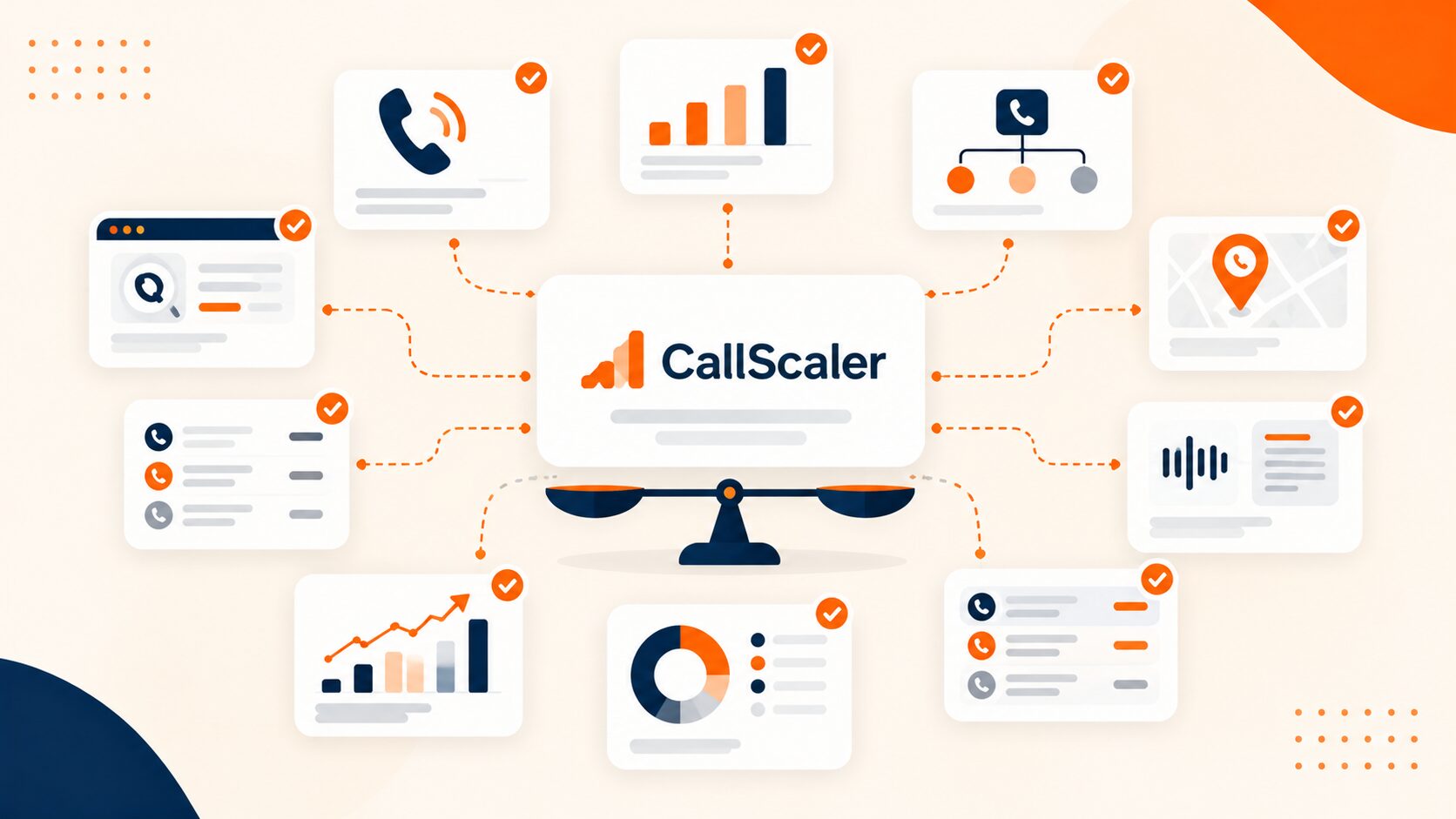
CallScaler is a capable call tracking platform that helps businesses monitor calls, manage leads, and measure marketing performance.
However, businesses may need more advanced analytics, additional integrations, greater flexibility, or dedicated support as their needs grow.
This blog covers the 10 best CallScaler alternatives for 2027, comparing their features, capabilities, and pricing to help you find the right fit.
CallScaler alternatives: Quick comparison
| CallScaler alternative | Best replacement use case | Important qualification |
| AvidTrak | Agency attribution and branded client reporting | Included phone usage has limits; confirm transcription and AI charges. |
| CallTrackingMetrics | Attribution connected to routing and follow-up workflows | Includes 25 sub-accounts; usage and expansion cost extra. |
| WhatConverts | Qualified-lead reporting across calls, forms, and chats | Single-account pricing does not cover an unlimited agency portfolio. |
| CallRail | Small-business campaign tracking and call analysis | Another official page says $55; confirm billing selection. |
| Nimbata | Attribution with answered-call billing | Transcription uses minutes; branding costs extra. |
| Ringba | Buyer routing, ring trees, and call monetization | RTB and ping/post trading are listed under custom Enterprise. |
| Retreaver | Attribute-based buyer matching with usage-based fees | Optional AI fees and volume-specific rates affect spend. |
| Phonexa | Networks distributing both calls and web leads | Required products, included volumes, and services determine scope. |
| Convirza | Conversation scoring and agent-performance analysis | Phone usage and individual AI services are separately priced. |
| Invoca | Enterprise attribution and affiliate call programs | Choose the appropriate package and specify AI options. |
What are you replacing in CallScaler?
CallScaler covers two overlapping needs: tracking calls for businesses and operating a pay-per-call program.
Its Call Tracking subscription is $95/month billed monthly, or $65/month billed annually. Pay Per Call is $600/month billed monthly, or $400/month billed annually, before usage charges.
The Call Tracking plan includes three businesses with five users each. Unlimited businesses and users cost an additional $95/month; white labeling and real-time bidding each list a $65/month add-on. Those capabilities are included in Pay Per Call, which also lists buyer and publisher management, buyer billing, and campaign management.
Identify the replacement requirement before comparing subscriptions:
- Marketing attribution: Which campaign, source, or website visit generated the call?
- Agency reporting: Can clients access their own call data and see results under your brand?
- Conversation analysis: Was the caller a suitable prospect, and what happened during the conversation?
- Pay-per-call operations: Which buyer received the call, why was it accepted, and what revenue or payout applies?
An attribution replacement may still require another system for buyer and publisher operations.
1. AvidTrak: Best for agency attribution and branded client reporting
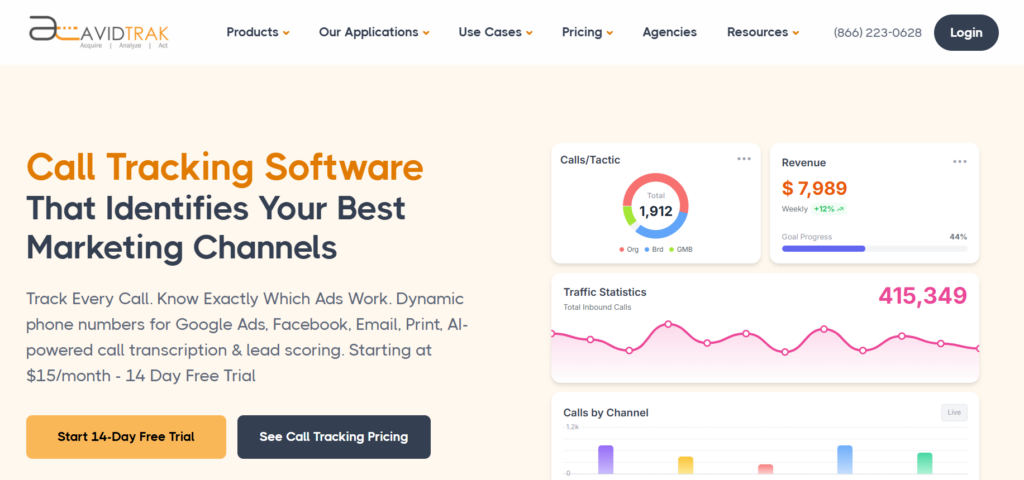 AvidTrak is a call tracking platform for agencies that need to connect marketing sources to phone inquiries and present the results separately for each client.
Its agency call tracking includes client access controls, branded dashboards, dynamic number insertion, keyword attribution, and routing by location, business hours, or IVR selection. Dynamic number insertion, or DNI, changes the website number according to the visitor’s source.
AvidTrak’s AI transcription and conversation outcomes add context such as booking requests, pricing inquiries, summaries, and caller intent. For an agency serving local businesses, that can make a report more useful than a count of inbound calls.
Pricing: The Agency plan is $55/month and lists 30 local numbers, 2,500 local minutes, 2,500 recording minutes, and up to 1,000 client accounts. These US and Canada allowances belong to the package; they are not repeated for every client. Paid activation requires a default $20 deposit, refundable upon request. The no-card trial ends after 14 days or when its $20 credit is used.
2. CallTrackingMetrics: Best for attribution connected to operational workflows
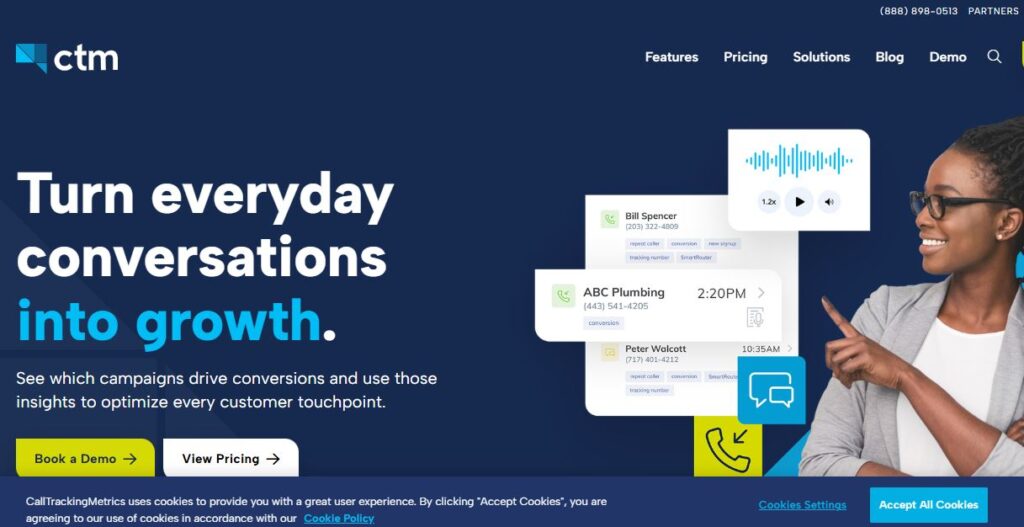 CallTrackingMetrics, or CTM, is relevant when a tracked call needs to trigger routing, reporting, or follow-up actions.
Marketing Pro combines DNI, custom fields, geographic routing, API access, and automated triggers. Its custom AskAI prompts can analyze conversations for questions defined by the team.
For an agency with several client locations, the appeal is connecting call measurement to the process that handles the lead. A qualifying event can feed an advertising conversion or initiate a follow-up action, rather than remaining only in a report.
Pricing: Marketing Pro is $179/month billed monthly or $149/month billed yearly, plus usage. It includes 25 sub-accounts, with additional packs of 25 at $50/month. The 3,000 transcription minutes per sub-account are an initial allowance that does not renew monthly; transcription afterward is $0.02/minute. Custom AskAI processing has separate charges.
3. WhatConverts: Best for qualified-lead reporting across calls, forms, and chats
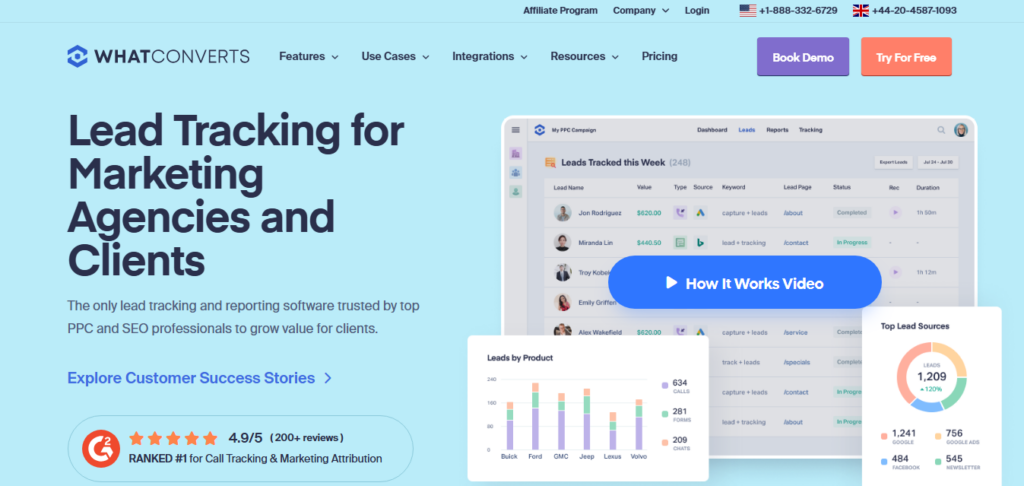 WhatConverts suits agencies whose clients receive leads through several channels and want those inquiries evaluated together.
Its tools organize leads with marketing-source information, support qualification and value assignment, and report which campaigns produced valuable inquiries. Calls, forms, and chats can sit within the same lead-reporting process.
This is useful when a client asks which campaigns generated opportunities worth pursuing. A call count alone cannot answer that question, particularly when some customers submit a form instead of phoning.
Pricing: Single-account Plus is $60/month with $30 in usage credit. Agency Plus is $500/month with unlimited accounts and $250 in usage credit. Agency Pro is $800/month with $300 in usage credit and adds call flows, custom report building, and scheduled reports. Additional usage affects the invoice. A 14-day trial is available.
4. CallRail: Best for small-business campaign tracking and call analysis
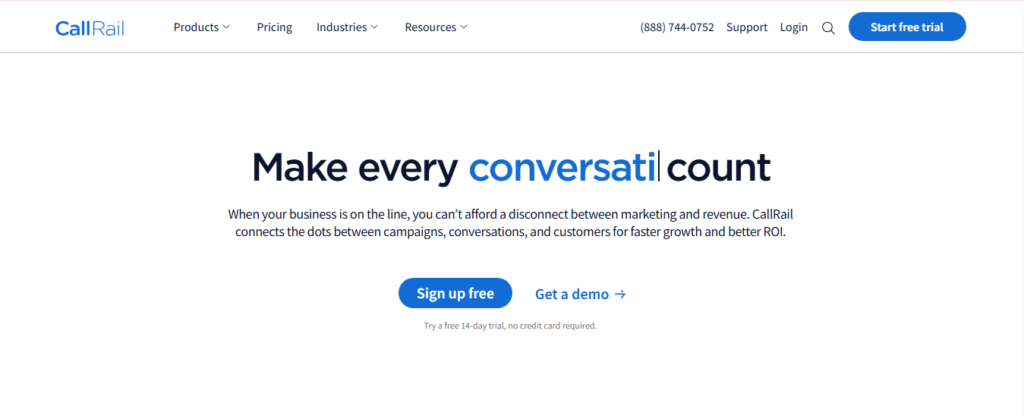 CallRail is a practical candidate for local businesses and agencies that need to connect calls and texts to marketing campaigns.
Its call tracking product supports source attribution, call flows, recording, transcripts, and automated classification rules. Higher packages add form tracking or premium conversation intelligence, including summaries, sentiment analysis, trends, and automatic conversion tagging.
The useful purchasing question is which level of analysis the business needs. Basic tracking, form attribution, and premium sales-conversation analysis address different gaps.
Pricing: Lead Tracking is advertised at $50/month plus additional usage on the pricing page, with five numbers and 250 minutes. The product page advertises a $55 starting price. Monthly and annual options are available; confirm the selected billing term and amount before treating either figure as your subscription price.
5. Nimbata: Best for attribution with answered-call billing
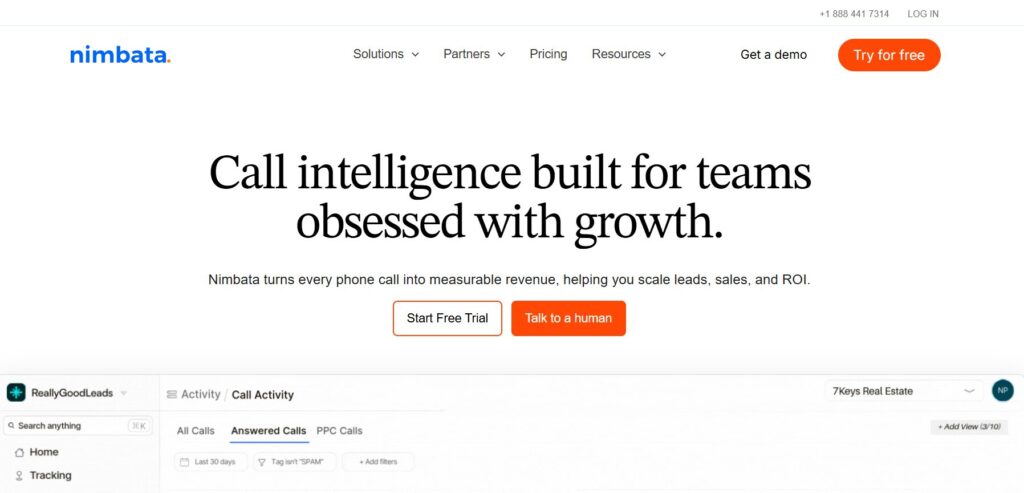 Nimbata deserves attention when lengthy calls make per-minute tracking costs difficult to forecast.
Its tracking model charges per answered call. Pro includes DNI, call flows, AI tagging and scoring, and Google Ads and GA4 connections. Agency lists unlimited seats, projects, and workflows, plus Salesforce, API access, and webhooks.
That billing unit is relevant for businesses with long consultations. It changes how phone usage is priced, but the final comparison still depends on the country-specific answered-call rate and the services applied to each conversation.
Pricing: Monthly base fees are $39 for Pro, $89 for Marketing, and $149 for Agency, plus usage. White labeling is $55/month and transcription is $0.02/minute. Pre-call workflows list a $0.01-per-call charge. Number and answered-call rates vary by the selected country.
6. Ringba: Best for buyer routing and ring-tree operations
 Ringba is a closer match when the main requirement is distributing calls among buyers and managing the revenue process around those connections.
Professional lists ring trees, predictive routing based on expected revenue per call, revenue recovery, and white labeling. Enterprise adds real-time bidding and ping/post call trading.
A ring tree organizes buyer destinations; the routing rules determine which buyer receives a call. In ping/post trading, call information is offered to buyers before the call is connected. These capabilities matter more to a call seller than a general campaign dashboard.
Pricing: Business is $147/month billed monthly or $127/month billed annually. Professional is $297/month billed monthly or $197/month billed annually. Numbers, minutes, recording, and transcription have separate usage rates. Enterprise requires a custom quote.
7. Retreaver: Best for attribute-based buyer matching and usage-based pricing
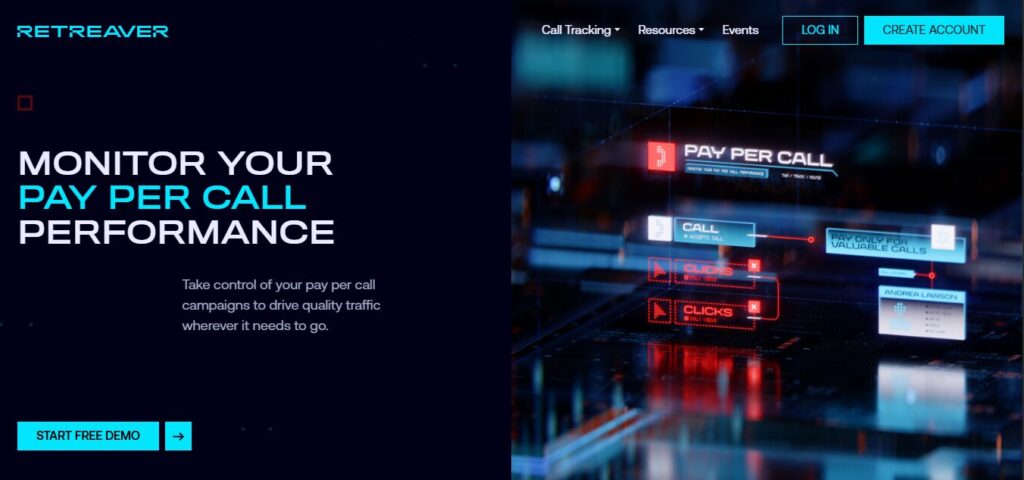 Retreaver connects call-source information with routing decisions based on caller attributes, including geography or product segment.
Its pay-per-call offering includes revenue and payout reporting, client billing, conversion criteria, and webhooks. It also documents RTB and call rescue, which redirects a call when the original buyer hangs up.
This makes Retreaver relevant to operators whose buyers accept different types of callers. The matching rules and conversion criteria can be as important as the number of calls generated.
Pricing: The official guide lists no mandatory monthly platform subscription or long-term contract. Base rates start at $0.05 per call minute and $1 per number per month. RTB carries no additional charge. Optional AI analysis has usage fees, and rates may vary with volume.
8. Phonexa: Best for networks distributing calls and web leads
 Phonexa fits lead networks that need both phone-call distribution and web-lead distribution within the replacement scope.
Call Logic handles call tracking and distribution, including IVR, ping/post bidding, call-flow design, and overflow routing. LMS Sync handles direct-post and ping-post web-lead buying and selling.
The practical benefit is managing two related transaction types. A network generating calls and form submissions can assess how both move from publisher to buyer without assuming that a phone-only product covers its web-lead operation.
Pricing: Phonexa uses custom quotes. Included call minutes and lead transactions vary by package, and its pricing page describes managed configuration and support services. Define the products, volumes, integrations, and support scope in the proposal.
9. Convirza: Best for conversation scoring and agent-performance analysis
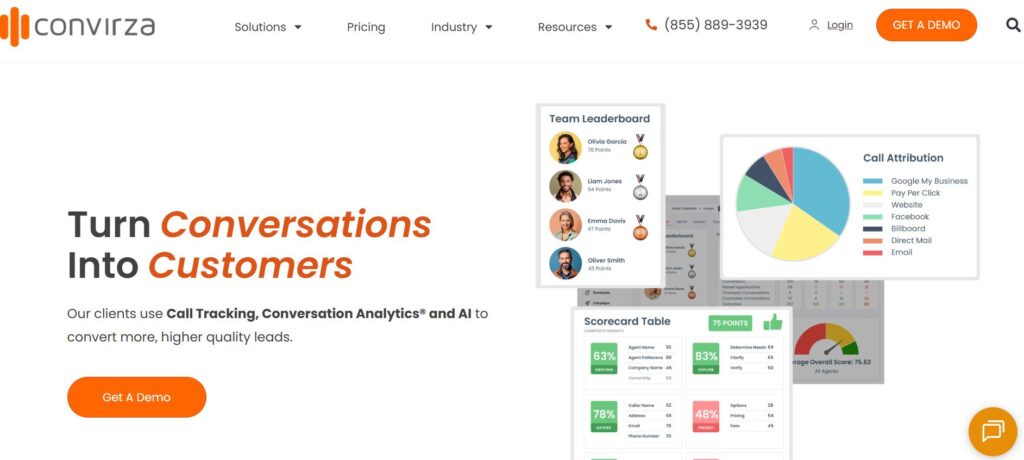 Convirza is relevant when the problem is understanding why tracked calls fail to become useful sales opportunities.
Its conversation analytics evaluates caller intent, lead quality, sentiment, and agent behavior through built-in and custom indicators. It also supports follow-up actions based on what happened during a conversation.
For example, a campaign may generate suitable callers while the receiving team fails to offer the next step. Conversation analysis can help distinguish a targeting problem from a call-handling problem.
Pricing: Starter is $29/month and Agency is $149/month, with separate number and minute charges. AI services are itemized: summary/transcription and standard call scoring each list $0.02/minute; advanced QA scoring lists $0.03/minute. Confirm the selected service combination in the quote.
10. Invoca: Best for enterprise attribution and affiliate call programs
 Invoca suits larger organizations that need call outcomes connected to marketing, sales, and contact-center decisions.
Signal AI supports business-specific models for intent, product interest, and conversation outcomes, alongside transcripts, summaries, and sentiment analysis. That helps larger teams evaluate calls against their own product and sales criteria.
Its separate performance packages also serve pay-per-call and affiliate programs. Performance Professional lists campaign syndication and payout assignment; Performance Enterprise adds dynamic routing with real-time webhooks.
Pricing: Packages require custom quotes. Specify whether you need the brands-and-agencies offering or a performance package, along with Signal AI, integrations, usage, and service terms. Optional capabilities should appear explicitly in the proposal.
How to choose a CallScaler replacement that fits your business
Separate attribution from call trading
An agency needs evidence linking a marketing source, a call, and a lead outcome. A pay-per-call operator also needs a record of the buyer decision and the revenue or publisher obligation.
For agencies, tracking digital and offline campaign sources should lead to clear client reporting. For networks, qualification, distribution, and financial records need to agree.
This distinction also resolves the ambiguity around “PPC”: pay-per-click advertising creates an attribution requirement, while pay-per-call selling adds commercial transaction requirements.
Compare the same account scope
Use your actual client portfolio when requesting pricing. Specify:
- Number of client accounts and users.
- Tracking numbers and website number pools.
- Call volume, average duration, and recording minutes.
- Transcription and other AI processing.
- Branded client access and required integrations.
- Buyer, publisher, and campaign requirements, where applicable.
Included accounts, included minutes, and usage credits are different allowances. None should be treated as unlimited capacity unless the provider explicitly makes that commitment.
Compare subscription and recurring usage separately from one-time costs, deposits, and prepaid balances. That gives you a useful budget without treating the entry fee as the final invoice.
Make the integration prove its value
An integration name is only the starting point. Test the fields and events your team actually needs.
CRM call tracking should connect call activity and source information to the correct working record. If revenue closes later, establish how the final outcome is returned to your reporting process.
For client call reports, use distinct definitions for an answered call, qualified inquiry, appointment, and completed sale. A positive AI score does not automatically mean a sale occurred.
Require evidence for payable calls
For pay-per-call operations, define geography, duration, duplication, buyer acceptance, caps, and exclusions before testing.
Then distinguish three functions: recording a payout amount, producing an invoice, and moving money. Ask which steps the platform performs and which remain in another system.
A useful transaction record lets your team explain why a call qualified, which buyer received it, and how any dispute or reversal affects the financial record.
Pilot the failure cases before moving the portfolio
Test a normal call alongside a repeat caller, wrong number, missed call, closed-hours call, and unavailable destination. For call trading, add a rejected buyer and a call that fails the payable-duration rule.
Agree on pass criteria first. Each test should show the correct source, destination, outcome, and relevant billing classification. Keep the migration decision tied to those results rather than a feature checklist alone.
Frequently asked questions
Can I port my numbers out of CallScaler?
Yes. CallScaler documents a port-out process initiated with the receiving provider and lists a $10-per-number port-out fee. Numbers stay active until the port completes. Arrange and test the transfer before canceling: CallScaler separately warns that cancellation releases account numbers.
How many numbers do I need for website call attribution?
The requirement depends on whether you track whole campaigns or individual visitor sessions. Fixed source numbers and session-level number pools serve different purposes. Ask the provider to size a website pool using peak simultaneous visitors and the number-assignment window. A package containing five numbers does not establish that it can support every website’s traffic.
Can I use an alternative for campaigns outside the US and Canada?
Check the destination country, number types, documentation, and forwarding rates before choosing. CallScaler says it offers numbers only for the US and Canada. Some alternatives support other markets; CTM notes that obtaining numbers outside the US may require additional documentation. International availability and pricing should be confirmed for the specific campaign.
Will historical call data transfer to the new platform?
Do not assume a complete import is supported. Export call logs, source mappings, campaign identifiers, qualification labels, and relevant revenue or partner references before ending service. Confirm which fields the receiving platform accepts. Recordings and transcripts may need separate storage within your approved retention rules, even when call-log data can be imported.
How do I prevent duplicate advertising conversions during migration?
Assign one system responsibility for sending each conversion event. Test the path from call to lead record to advertising upload, and use the deduplication method supported by the receiving tools. During the changeover, prevent both platforms from sending the same event. Keep raw calls, qualified leads, and completed sales as distinct conversion definitions.
Which CallScaler alternative should you choose?
Choose according to the work you need the replacement to perform.
For an agency, prioritize reliable source attribution, client data separation, useful outcome reporting, and a budget that matches the portfolio. AvidTrak is a relevant first evaluation for that requirement.
For a business selling calls, prioritize buyer matching, qualification rules, revenue records, and the exact billing or payment steps needed. Ringba, Retreaver, and Phonexa warrant closer comparison, with Invoca relevant to larger enterprise or affiliate programs.
If agency attribution and reporting are your main gap, start an AvidTrak trial with one client and a defined campaign. Use the pilot to decide whether the resulting call evidence is clear enough for both your team and the client.


