


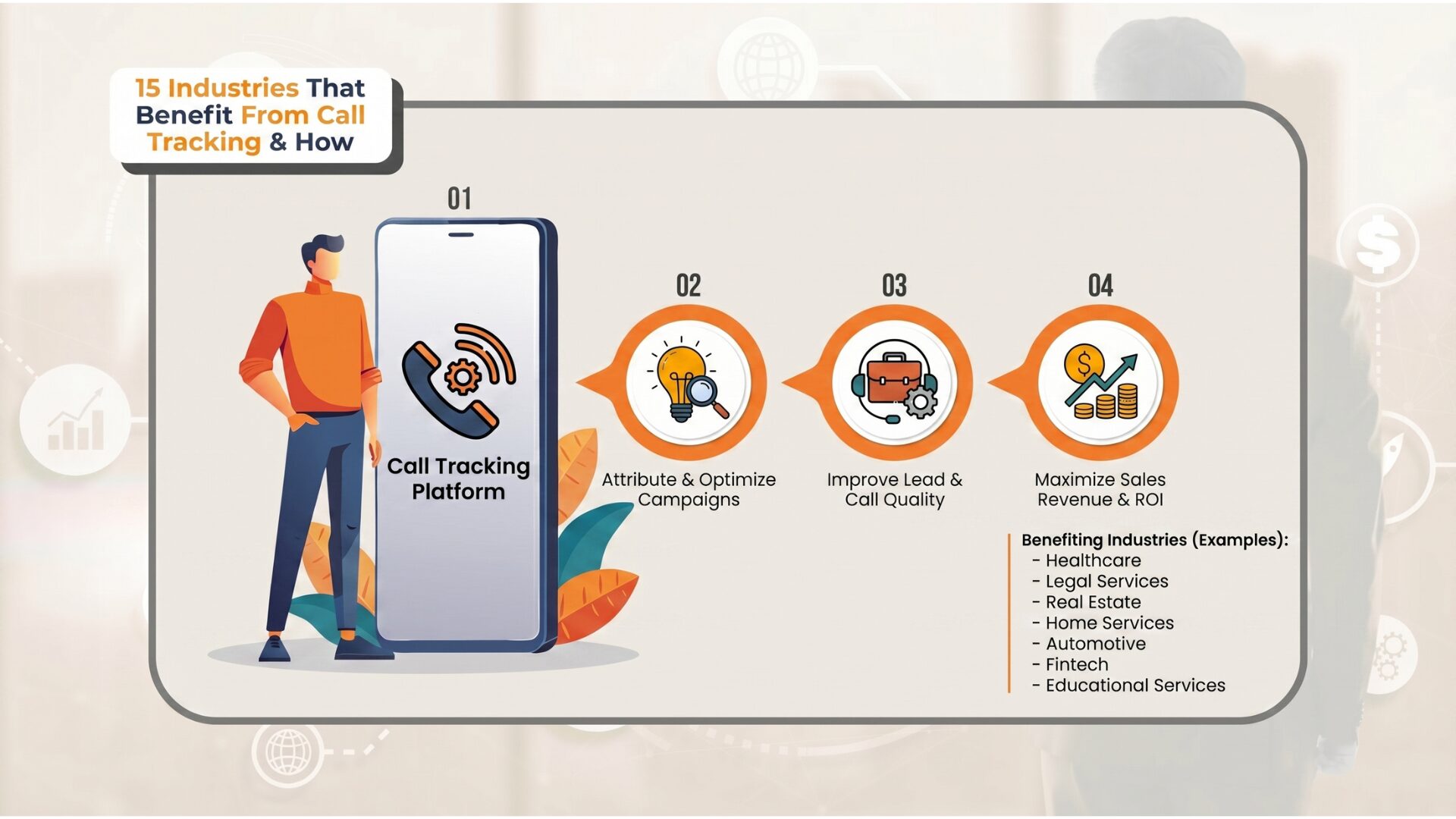
Calls still shape revenue in many industries, even when the first click happens online.
A business may invest in paid search, SEO, social media, local listings, email, and landing pages, but if the customer picks up the phone before buying, the real conversion story is incomplete without call tracking.
That gap is exactly where call tracking matters. It helps businesses see which campaigns generated calls, which calls were answered, which ones were qualified, and which ones turned into appointments, deals, or revenue.
For some industries, that is useful. For others, it is central to growth, budgeting, staffing, and sales accountability.
What call tracking actually helps a business do
At a practical level, call tracking helps a business answer questions such as:
- Which channel drove the call
- Which campaign, keyword, or landing page influenced it
- Which location or team received it
- Whether the call was answered, missed, or sent to voicemail
- Whether the call was a qualified lead, a support issue, spam, or a wrong number
- Whether the call turned into an appointment, quote, sale, or closed revenue
That matters most in industries where phone calls are still a major step in the buying journey.
Which industries benefit the most from call tracking
The strongest fit usually comes from industries with five characteristics:
- Customers call before buying
- Sales happen offline or partly offline
- Marketing runs across several channels
- Teams need to route or manage calls correctly
- Revenue per lead is high enough that missed calls are expensive
Using that lens, the industries below usually get the most value from call tracking solutions.
1. Home Services
Home services is one of the clearest use cases for call tracking.
This includes:
- HVAC
- plumbing
- roofing
- electricians
- pest control
- garage door services
- appliance repair
- restoration companies
- landscaping
- cleaning services
Why it benefits
Customers often need help quickly. Many do not want to fill out a long form and wait. They call.
A person with a broken AC unit in peak summer usually wants immediate confirmation, pricing guidance, or a booking window. That means the phone call is not a side action. It is the lead.
What call tracking helps measure
- which service keywords drive calls
- which cities or service areas produce the best leads
- which campaigns generate emergency calls versus low-intent inquiries
- how many calls were missed after business hours
- which calls became booked jobs
- which source produced the most revenue, not only the most calls
Example
A plumbing company may run campaigns for “emergency plumber,” “drain cleaning,” and “water heater repair.” Call tracking can show that emergency plumbing generates fewer calls but much higher booked revenue, while drain cleaning brings more calls but lower-value jobs. That changes budget decisions immediately.
Why this matters for management
Home service businesses often lose money not because leads are absent, but because calls are missed, routed badly, or judged only by volume.
2. Healthcare and Medical Practices
Healthcare organizations often depend heavily on phone calls.
This includes:
- dental clinics
- urgent care centers
- primary care practices
- specialty clinics
- cosmetic treatment centers
- rehabilitation providers
- mental health services
- veterinary clinics
Why it benefits
Patients often call to ask about availability, treatment options, insurance acceptance, urgency, or next steps. In many cases, a call is the first real conversion event.
What call tracking helps measure
- which treatment pages and campaigns generate calls
- which locations get the most inquiries
- which campaigns drive appointment-ready callers
- how many calls go unanswered during peak hours
- how quickly missed calls are returned
- which service lines produce the strongest patient acquisition value
Example
A dental group may advertise implants, Invisalign, emergency care, and routine cleaning. Call tracking can show that emergency campaigns bring a lot of quick calls, but implant-related calls carry much higher long-term revenue. That helps the group judge acquisition strategy more accurately.
Special note
Healthcare teams also need to think carefully about privacy, access controls, recording permissions, and data handling. In this industry, call tracking has to support both marketing measurement and responsible operations.
3. Legal Services
Legal practices are another strong fit because calls usually come from people who want direct reassurance before making a decision.
This includes:
- personal injury firms
- family law firms
- criminal defense practices
- immigration law firms
- estate planning firms
- employment law practices
- mass tort firms
Why it benefits
Legal leads are often emotional, urgent, and high-value. Many prospects do not want to submit a form and wait. They want to speak to someone now.
What call tracking helps measure
- which campaigns produce signed cases, not just inquiries
- which keywords generate strong-fit leads
- how intake quality varies by source
- which offices or intake teams miss the most calls
- how call handling affects conversion into consultations
Example
A personal injury firm may bid on terms related to car accidents, slip-and-fall cases, and truck accidents. Call tracking may reveal that truck accident calls are fewer but much more valuable. That would justify a different bidding and intake strategy.
Why this industry values call review
Law firms often need to understand not only where the call came from, but whether intake handled the call correctly. That makes call recording, call classification, and source-level reporting especially useful.
4. Automotive
Automotive businesses rely on calls throughout the buying journey.
This includes:
- dealerships
- used car lots
- service centers
- body shops
- tire shops
- local auto repair businesses
Why it benefits
Prospects often call to ask about stock availability, financing options, service appointments, trade-ins, warranty questions, or same-day repair. Even when research starts online, the phone often closes the gap between interest and action.
What call tracking helps measure
- which campaigns produce vehicle inquiry calls
- which service campaigns drive appointment calls
- which calls turn into showroom visits or repair orders
- which stores answer quickly and which do not
- how location-level performance compares
Example
A dealer group may see that one campaign drives a high number of calls about low-stock vehicle models that are already unavailable. Another campaign may drive fewer calls but more scheduled test drives. Call tracking helps separate noise from true sales activity.
Why multi-location groups benefit
Dealer groups often need local reporting and central reporting at the same time. That makes call tracking especially valuable for location-level accountability.
5. Real Estate
Real estate is still a phone-heavy industry, especially for high-intent buyers and renters.
This includes:
- residential brokerages
- commercial real estate firms
- apartment leasing teams
- property management companies
- real estate developers
Why it benefits
People researching homes, offices, or rentals often call before committing to a viewing or inquiry. The value per lead is usually high, and lead speed matters.
What call tracking helps measure
- which listing portals, ads, and campaigns drive calls
- which communities or properties receive the most call interest
- which calls become viewings or lease conversations
- whether leasing teams answer promptly
- which traffic sources create serious prospects
Example
An apartment brand may advertise across Google Ads, listing sites, and local SEO pages. Call tracking can reveal that listing sites drive more calls overall, but branded search drives better-fit callers who book tours faster.
6. Insurance
Insurance buyers often want clarity before taking the next step.
This includes:
- health insurance brokers
- auto insurance agents
- home insurance providers
- commercial insurance advisors
- life insurance agencies
Why it benefits
Insurance products can be complex. Buyers often want to ask about coverage, eligibility, pricing, exclusions, or comparison options before committing.
What call tracking helps measure
- which campaigns drive policy inquiries
- which keywords produce quote-ready callers
- which calls convert into agent conversations
- which offices or agents handle call demand best
- which campaigns produce high-value policy outcomes
Example
An insurance agency may find that broad comparison keywords drive a lot of phone calls but many low-intent shoppers, while local branded campaigns drive fewer calls with higher close rates. That is a valuable difference.
7. Financial Services
Financial decisions often create questions that customers prefer to discuss by phone.
This includes:
- mortgage brokers
- lenders
- debt relief services
- tax advisory firms
- wealth management firms
- accounting practices
Why it benefits
Trust matters heavily in this category. Prospects often want direct contact before moving forward.
What call tracking helps measure
- which channels produce mortgage inquiries
- which campaigns drive consultation calls
- which keywords produce qualified financial leads
- how call outcomes vary by product line
- whether high-value inquiries are being handled correctly
Example
A mortgage broker may run campaigns around refinance, first-time buyer loans, and investment property financing. Call tracking can show that refinance terms generate more call volume while investment property terms produce fewer but higher-value deals.
8. Education and Admissions
Education providers often depend on phone calls during enrollment.
This includes:
- private schools
- colleges
- universities
- training institutes
- certification programs
- online education providers with admissions teams
Why it benefits
Prospective students and parents often call to ask about fees, eligibility, timelines, course outcomes, scholarships, or campus details.
What call tracking helps measure
- which campaigns drive admissions calls
- which programs get the most call interest
- which sources lead to completed applications or enrollments
- how call quality varies by team
- where follow-up breaks down
Example
A training institute may promote digital marketing, design, and software courses. Call tracking may reveal that software course campaigns generate fewer calls, but those callers are much more likely to convert into enrollment.
9. Travel and Hospitality
Travel still produces many phone-based conversions in certain segments.
This includes:
- hotels
- resorts
- tour operators
- travel agencies
- event venues
- wedding venues
Why it benefits
Customers call when they want clarification, special requests, group pricing, booking support, or direct reassurance before payment.
What call tracking helps measure
- which campaigns drive booking calls
- which offers generate genuine interest
- how many calls are missed during peak inquiry windows
- which locations or teams convert calls best
- which campaigns produce high-value bookings
Example
A wedding venue may get calls from paid search, Instagram campaigns, and referral traffic. Call tracking can show that social campaigns generate lots of curiosity calls, while branded search leads to more serious booking discussions.
10. B2B Services
B2B is not always thought of as a phone-led category, but many B2B services depend on calls during qualification and sales.
This includes:
- IT service providers
- managed service providers
- consulting firms
- logistics companies
- commercial cleaning companies
- security providers
- staffing firms
Why it benefits
Decision-makers often call to understand scope, urgency, fit, and pricing. In many B2B categories, a call is part of lead qualification even if the deal closes later.
What call tracking helps measure
- which campaigns drive inbound consultations
- which keywords bring target accounts versus poor-fit leads
- whether calls turn into qualified opportunities
- how source quality affects sales efficiency
- which industries or service pages generate high-value calls
Example
A commercial cleaning company may advertise office cleaning, medical facility cleaning, and industrial cleaning. Call tracking can show that medical facility pages bring fewer inquiries but stronger long-term contracts.
11. Franchises and Multi-Location Brands
This is less a single industry and more a business structure, but it is one of the strongest call tracking use cases.
This includes:
- restaurant chains with phone ordering or catering
- urgent care groups
- home service franchises
- automotive chains
- retail service brands
- fitness and wellness groups
Why it benefits
These businesses need two levels of visibility:
- central marketing visibility
- local operational visibility
What call tracking helps measure
- which campaigns drive calls by location
- which locations answer well and which do not
- where local demand is strongest
- how local call handling affects conversion
- which markets justify more ad spend
Example
A franchise group may run national paid media but route calls locally. Without call tracking, head office may know the spend but not which locations captured or wasted the leads.
12. Senior Living and Care Services
This category often depends heavily on phone contact because families want reassurance, not just information.
This includes:
- assisted living providers
- memory care facilities
- home care agencies
- rehabilitation services
- elder support providers
Why it benefits
These are high-trust, high-consideration decisions. Families often call several times before making a move.
What call tracking helps measure
- which campaigns produce family inquiries
- how call handling affects tour bookings
- which service lines produce qualified leads
- whether missed calls are damaging occupancy
- which markets respond best to certain messaging
Example
A senior living operator may find that branded search produces fewer calls but more tour-ready conversations, while broad awareness campaigns generate longer research calls earlier in the decision process.
13. Beauty, Cosmetic, and Wellness Services
Phone calls still matter heavily when appointments, consultations, and high-ticket treatments are involved.
This includes:
- cosmetic clinics
- med spas
- plastic surgery practices
- salons with consultation-heavy services
- wellness centers
- fertility services
Why it benefits
People often call before committing to a treatment. They want to ask about availability, outcomes, consultation process, and suitability.
What call tracking helps measure
- which treatments drive the most consultation calls
- which campaigns produce serious callers
- how well front desk teams convert calls into bookings
- which locations or providers attract the best demand
Example
A cosmetic clinic may promote injectables, laser treatments, and body contouring. Call tracking can reveal that laser campaigns drive the highest volume, but body contouring consultations create more revenue per call.
14. Restaurants and Food Businesses With Phone Conversion Paths
Not every restaurant needs call tracking, but many do.
This includes:
- catering businesses
- banquet halls
- fine dining with reservations
- delivery-heavy local restaurants
- event dining services
Why it benefits
The value rises when calls lead to reservations, group bookings, catering orders, or event inquiries rather than simple general questions.
What call tracking helps measure
- which campaigns produce reservation calls
- which channels drive catering inquiries
- how often calls go unanswered during rush periods
- which promotions trigger actual bookings
Example
A catering business may find that generic seasonal promotions bring many short calls, while wedding landing pages produce fewer but much more valuable inquiries.
15. E-commerce Businesses With High-Consideration Products
A lot of e-commerce is fully online, but not all of it.
This includes:
- furniture stores
- luxury retail
- custom products
- large appliances
- jewelry
- B2B commerce stores
- products requiring consultation before purchase
Why it benefits
Customers call when the order value is high, the product is complex, or reassurance is needed before buying.
What call tracking helps measure
- which product pages trigger call intent
- which campaigns lead to consultative calls
- how many calls turn into sales or assisted conversions
- whether call demand increases during promotions or seasonal peaks
Example
A furniture brand may see that search traffic to sectional sofas, dining tables, and custom upholstery pages leads to a meaningful number of calls before purchase. Without call tracking, that influence may never be credited properly.
Industries that usually see the highest return from call tracking
Not every industry gets equal value. In practice, the highest return usually comes from industries where:
- each lead has meaningful revenue potential
- the phone is part of the sales journey
- lead speed affects close rate
- several marketing channels are active
- missed calls are expensive
- teams need accountability across locations or agents
That is why home services, healthcare, legal, automotive, insurance, real estate, and high-trust service businesses often stand out first.
Industries that may need lighter call tracking rather than full-scale deployment
Some businesses still benefit, but may not need an advanced setup right away.
Examples include:
- low-ticket retail with minimal phone interaction
- simple ecommerce stores with mostly online checkout
- businesses where calls are mostly support-related, not sales-related
- very small local businesses running little to no trackable marketing
In those cases, a lighter system may be enough unless growth, paid media, or multi-location reporting becomes more important later.
How to tell if an industry is a strong fit
A business is usually a strong fit for call tracking if the answer is yes to several of these:
- Do customers often call before buying?
- Do calls influence appointments, quotes, bookings, or sales?
- Is the business spending on paid search, SEO, local SEO, social ads, or directories?
- Is management struggling to connect calls to campaign performance?
- Are missed calls or poor routing hurting results?
- Are several locations, agents, or teams handling the same demand?
- Is the average lead value high enough that one missed call matters?
If yes, call tracking is not just a reporting extra. It is part of revenue measurement.
What businesses in these industries should track
For call tracking to be useful, businesses should go beyond total calls.
The most useful metrics usually include:
- total calls
- answered calls
- missed calls
- after-hours calls
- qualified calls
- call source
- campaign attribution
- keyword attribution
- landing page attribution
- call-to-appointment rate
- call-to-lead rate
- call-to-sale rate
- revenue by channel from calls
- missed call rate
- callback response time
- spam call rate
- repeat caller rate
Those metrics help a business judge both marketing quality and operational performance.
Practical examples of why industry context matters
A home services company may care most about speed-to-answer, service-area routing, and emergency lead capture.
A healthcare practice may care more about appointment conversion, service-line reporting, and call handling quality.
A law firm may focus on intake accuracy, signed-case value, and campaign-level source quality.
A dealer group may care about location-level reporting, service bookings, and showroom-driving calls.
The same software category can support all of these, but the setup, reporting, and priorities should match the industry.
Conclusion
The industries that benefit most from call tracking are the ones where calls influence real buying decisions, not just casual contact. When phone calls sit between marketing spend and revenue, call tracking helps businesses see what is working, what is being missed, and where better handling can lift results.
That is why call tracking matters across sectors such as home services, healthcare, legal, automotive, insurance, real estate, education, B2B services, and multi-location operations.
In these industries, it is not just about counting calls. It is about measuring lead quality, routing, responsiveness, conversion, and revenue with much better clarity.
Frequently asked questions
Which industry benefits the most from call tracking?
Home services is often one of the strongest use cases because customers call quickly, lead value is meaningful, and missed calls can directly reduce revenue. Healthcare, legal, automotive, and insurance also benefit heavily.
Is call tracking only useful for local businesses?
No. It is useful for local businesses, multi-location brands, franchises, and enterprise teams. Any business that relies on phone calls in the buying journey can benefit.
Does every business need advanced call tracking?
No. Businesses with very low call volume or mostly online-only conversion paths may not need a full setup. The strongest fit comes when calls are part of lead generation or sales.
Can e-commerce businesses benefit from call tracking?
Yes, especially when products are high-ticket, custom, or research-heavy. In those cases, phone calls often assist conversions even when checkout happens later.
What makes call tracking valuable in multi-location businesses?
It helps central teams measure campaign performance while local teams manage response, routing, and lead handling. That combination is hard to manage accurately without call tracking.


