


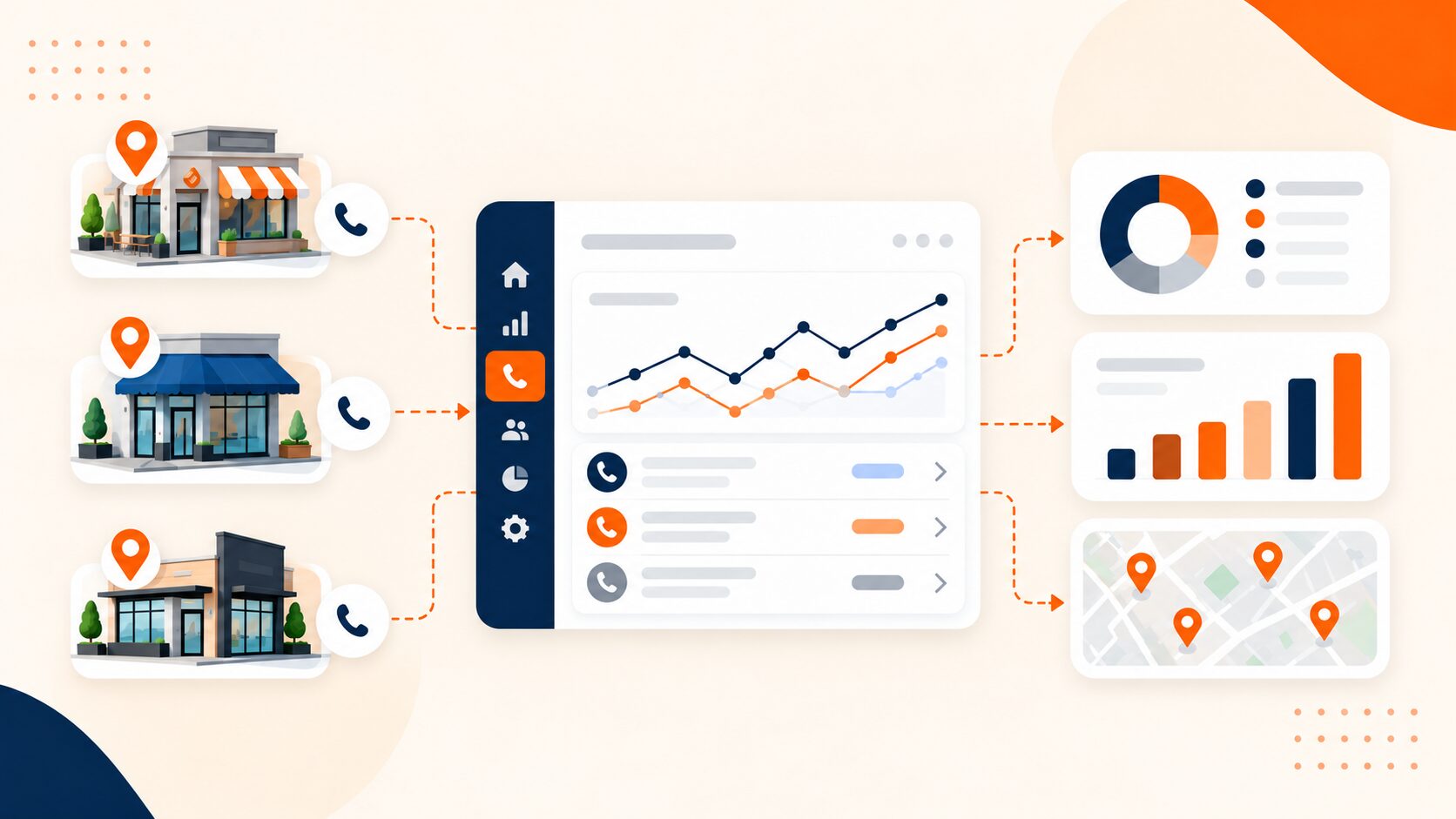
Managing customer calls across multiple business locations can make it difficult to identify which campaigns and branches generate qualified leads.
The right call tracking software helps businesses improve call attribution, route calls to the right locations, and monitor performance through centralized reporting.
This blog compares the 10 best call tracking software options for multi-location businesses, covering their features, capabilities, and pricing to help you find the right solution.
Compare the 10 multi-location call tracking tools
| Software | Best fit | Relevant multi-location capability | Check before buying |
| AvidTrak | Attribution and configurable routing across branch networks | Location numbers, territory routing, account permissions, and scheduled reports | Numbers and usage required beyond the plan’s allowances |
| CallRail | Local-business groups measuring branch marketing and listings | Multiple companies within an account and location-specific Google Business Profile numbers | Reporting scope, local-user access, and selected billing terms |
| CallSource | Automotive and service groups reviewing marketing and phone handling | Location, employee, and advertising-source reports; automotive DNI options | Which attribution, analysis, and service products the proposal includes |
| CallTrackingMetrics (CTM) | Networks combining attribution with operational call workflows | Sub-accounts, automation, routing, and team reporting | Required tier, sub-account capacity, and usage charges |
| Convirza | Groups prioritizing conversation scoring and staff coaching | Call analysis and location-performance review | Analytics scope beyond the call-tracking subscription |
| Infinity | Retail and dealer groups connecting calls with marketing | Store and regional reports, group totals, and location-controlled access | Regional package, integrations, and conversation-analysis costs |
| Invoca | Enterprise networks coordinating marketing and customer experience | Location dashboards, automated scoring, routing, and alerts | Core package versus optional CX, AI, and integration products |
| Marchex | Automotive and service networks comparing location performance | Marketing attribution and network, location, and department analysis | Product combination needed for attribution and operational reporting |
| Nimbata | Multiple branch pages on one website | Shared script, separate location projects, and scoped dashboards | Project allowances, number charges, and answered-call fair-use terms |
| WhatConverts | Networks comparing calls with forms and chats | Master Account, Accounts, and Profiles | Account structure and feature tier before selecting individual or agency pricing |
How this comparison was made
The selection focuses on six requirements: location attribution, local and headquarters visibility, routing, integrations, conversation review, and deployment cost.
Providers were included because their official materials document relevant call-tracking and multi-location capabilities. This is a documentation-based comparison, not a hands-on performance test. Features may require particular plans, products, or configuration.
The 10 call tracking platforms
1. AvidTrak
 Best fit: Branch networks that need campaign attribution and configurable call distribution.
AvidTrak’s franchise call tracking supports location-specific numbers, campaign attribution, user permissions, missed-call reporting, and scheduled reports. Routing can follow geographic or ZIP-code rules, IVR selections, business hours, and overflow requirements.
This combination is relevant when headquarters runs marketing while local offices handle inquiries, with central coverage for busy or closed branches.
Pricing: Published US and Canada plans start at $15 per month. Agency is $55 per month and includes 30 local numbers, 2,500 local minutes, 2,500 recording minutes, and 1,000 client accounts. Additional usage is separate.
Main trade-off: Account capacity does not establish the number of fully tracked locations the subscription covers. Campaign numbers and website pools can consume the included number allowance quickly.
Validate the proposed hierarchy using headquarters, regional, and branch logins before expanding.
2. CallRail
 Best fit: Local-business groups that want branch-level marketing measurement and Google Business Profile call tracking.
CallRail supports multiple companies and users within an account. Its location-setup documentation describes assigning tracking numbers to individual Google Business Profile listings, making it relevant to businesses where local search generates phone demand.
Pricing: Published subscription packages include five numbers and 250 minutes at entry level, with additional usage billed separately. Obtain the price for your selected monthly or annual commitment and required feature package.
Main trade-off: Five numbers do not necessarily cover five locations. A branch can need separate listing, campaign, and website-pool numbers.
A useful demonstration should show location-specific records, the combined report headquarters needs, and exactly which information a local manager can access. Do not assume that company organization automatically matches your franchise ownership structure.
3. CallSource
 Best fit: Automotive and service groups connecting advertising results with call-handling performance.
CallSource’s CallTrack includes campaign numbers, recordings, missed-call notifications, and reports categorized by location, employee, and advertising source. Its automotive EveryLead offering adds digital attribution through DNI and text-enabled numbers.
That distinction matters for networks evaluating both marketing performance and the way local teams respond to inquiries.
Pricing: Request a proposal for the products, numbers, usage, analysis, and services required.
Main trade-off: CallTrack and EveryLead have different scopes. A basic tracking purchase should not be assumed to include the full automotive attribution or coaching offering.
Ask the provider to follow one branch inquiry from its advertising source through the call record and required follow-up. Confirm how the same information appears in regional reporting.
4. CallTrackingMetrics (CTM)
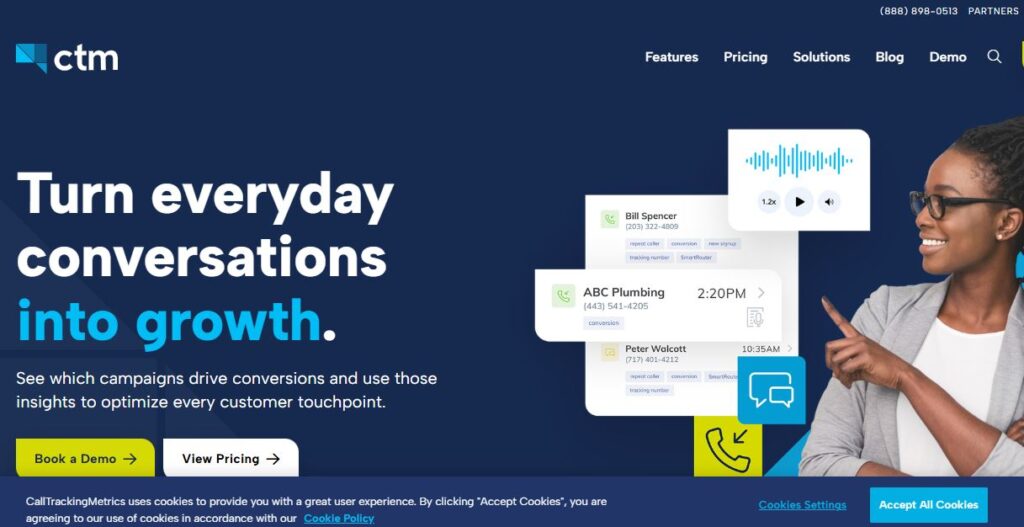 Best fit: Networks that need attribution, configurable workflows, and operational call management.
CTM combines tracking with sub-accounts, automation, reporting, and routing. Marketing Pro is explicitly positioned for teams managing multiple locations. Sales Engage adds capabilities including advanced skills-based and weight-based routing.
Pricing: Marketing Lite starts at $79 per month billed monthly, plus usage. Marketing Pro is $179 monthly or $149 per month billed annually, plus usage. Marketing Pro includes 25 sub-accounts; additional packs of 25 cost $50 per month.
Main trade-off: The relevant starting plan depends on your required integrations, routing, and account structure. The lowest subscription is not the complete multi-location purchase.
Map the account hierarchy first, then confirm the tier. Test the actual branch call flow and headquarters report together, particularly if local teams need operational calling features.
5. Convirza
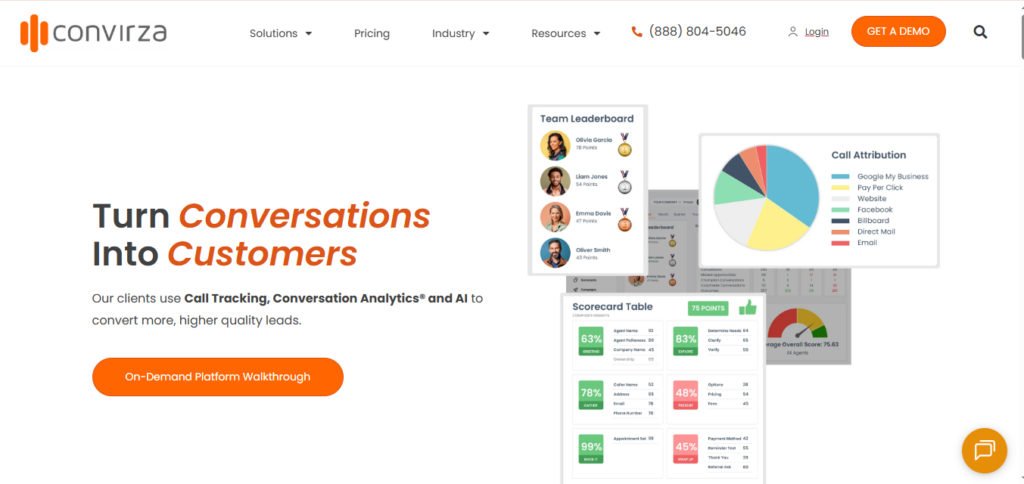 Best fit: Groups where inconsistent call handling is a bigger problem than counting inquiries.
Convirza combines call tracking with conversation analytics. Its multi-location dental material describes evaluating intake conversations, booking behavior, and staff performance. That makes it relevant to teams standardizing how branches handle valuable calls.
Pricing: Published tracking plans include Starter at $29 per month and Agency at $149 per month, with separate number and minute charges. Enterprise requires a quote.
Main trade-off: Tracking-plan pricing is not the price of a complete analytics deployment. Confirm the conversation-analysis features, location access, integrations, and service scope in the proposal.
For a pilot, give regional and local managers the same scoring definitions. Review calls where the automated result and the manager’s judgment differ before using scores to compare branches.
6. Infinity
 Best fit: Retail and dealer groups needing store-level attribution and regional oversight.
Infinity documents reporting by store, counter, and region, with group-level totals and location-controlled access. Its offering combines call attribution with conversation analytics and marketing connections.
This suits organizations where customers research products online before calling a particular outlet about availability, an order, or an appointment.
Pricing: Essentials and Pro use packaged pricing with usage charges; Enterprise is priced on application. Request the applicable regional package and required analysis and reporting scope.
Main trade-off: A package advertised in one region does not establish the cost or availability of every country, number type, or integration.
Check a store report against its regional total. Then confirm the proposed permissions using a local login rather than relying on a headquarters dashboard demonstration.
7. Invoca
 Best fit: Enterprise networks coordinating marketing, call quality, and customer-experience operations.
Invoca’s Multi-Location CX offering includes location dashboards, automated call scoring, routing by intent or location, and alerts for call-handling issues. Reporting can extend across regions and individual locations.
It belongs on the shortlist when central teams need to turn conversation findings into operational actions across a large network.
Pricing: Custom quote. Published packaging distinguishes core functionality from optional products and premium integrations.
Main trade-off: A proposal for marketing attribution does not necessarily include the entire multi-location CX, quality-management, AI-agent, and integration scope.
Define the action you need before evaluating the package: an alert for an unanswered call, a coaching task, a campaign conversion, or a customer-record update. Have the demonstration follow that action through to completion.
8. Marchex
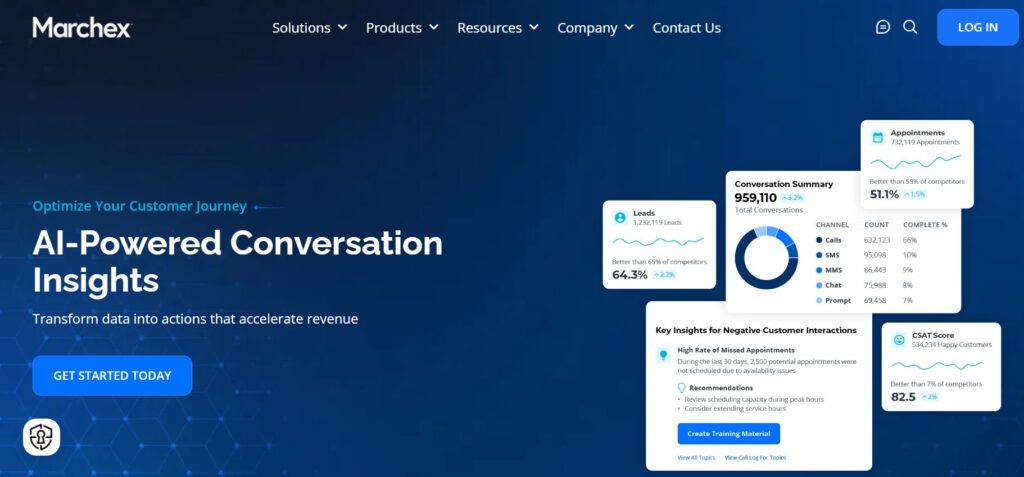 Best fit: Automotive and service networks comparing marketing demand with location-level performance.
Marchex documents DNI, campaign attribution, and call classification by store location. Spotlight for Automotive adds analysis from the network level down to locations and departments.
The relevant buying question is whether weak results come from the advertising, the destination department, or the way inquiries are handled locally.
Pricing: Request a proposal for the required products and deployment.
Main trade-off: Confirm which product combination supplies the attribution and operational reporting you need. Do not assume that every capability sits in one package.
For a dealer group, test sales and service calls separately. Ask the provider to show how a regional manager identifies a location-level problem and inspects the underlying conversations.
9. Nimbata
 Best fit: Brands with multiple branch pages under one website.
Nimbata documents one shared tracking script across location projects, while each project retains its own numbers, destinations, and call flows. Branch users have scoped views; administrators can review the network.
That is a relevant deployment model when visitors move between branch pages and the displayed tracking number must follow the selected location.
Pricing: Published monthly subscriptions include Pro at $39 and Agency at $149, before usage. Tracking numbers, answered calls, and optional processing contribute to the total. Its pricing FAQ also specifies a fair-use condition when average call duration per destination exceeds 3.5 minutes.
Main trade-off: Answered-call pricing should not be interpreted as an unconditional fixed cost for conversations of any length.
Confirm project and seat allowances, fair-use treatment, and the correct number swap when a visitor changes branch pages.
10. WhatConverts
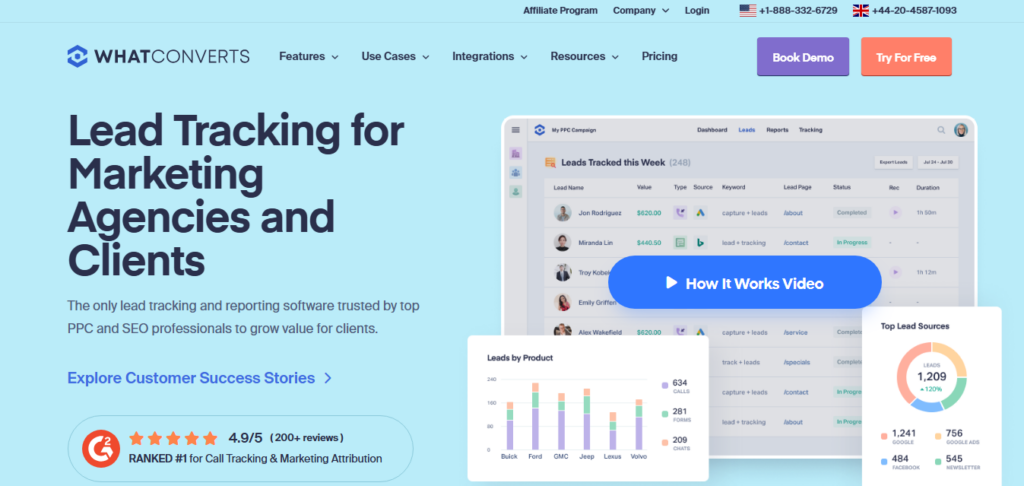 Best fit: Networks evaluating calls alongside forms and chats.
WhatConverts uses a Master Account, Accounts, and Profiles. Its documented multi-location example places regions or divisions at Account level and branches or websites at Profile level. Lead data sits within Profiles.
Pricing: Individual Call Tracking starts at $30 per month. Individual Pro is $100 per month. Agency Plus is $500 per month with unlimited Accounts and $250 in usage credit; Agency Pro is $800 with $300 in credit. Pro tiers add call flows and advanced reporting.
Main trade-off: Location count alone does not decide the plan. Individual plans apply per Account; agency plans provide unlimited Accounts under one Master Account. Confirm the required structure and reporting before choosing.
Have the provider demonstrate branch, regional, and combined reporting using your actual hierarchy, including the permissions each user needs.
Keep marketing location, answering team, and service location separate
A call can originate from one branch’s marketing, be answered centrally, and result in work for another branch. These are different reporting facts.
In an illustrative example, someone calls from the North Branch landing page. The central booking team answers during an overflow period and schedules the job for East Branch.
| Information | Correct value | What it explains |
| Marketing location | North Branch | Which branch page or campaign generated the inquiry |
| Answering team | Central booking team | Who handled the conversation |
| Service location | East Branch | Which branch owns the appointment or job |
The marketing location does not establish the caller’s address. The answering team does not automatically deserve credit for generating the inquiry.
Ask how the platform preserves these fields through routing, transfers, and CRM updates. They may require native fields, custom mappings, or records in another system. Not every provider supplies all three automatically.
How to choose call tracking software for multiple locations
Prove access boundaries using real roles
A filter that hides other branches is not the same as a permission that prevents access.
Show the provider your structure: brand, region, franchise owner, branch, agency, and central team. Test a one-branch manager and an owner responsible for several branches.
Check access to call records, recordings, transcripts, exports, settings, and billing. Also confirm who can change routing or grant another user access.
Match routing to actual operating rules
Document normal hours, holidays, temporary closures, territory boundaries, and overflow coverage.
A branch may answer locally during the day and use a shared team after hours. Neighboring locations may serve different territories.
Evaluate advanced call routing against those requirements. Specify what happens when nobody answers, and verify that sending a call elsewhere does not overwrite its original marketing context.
Test the entire location-selection experience
A successful number swap on one landing page is only the start.
Test the store finder, location-page navigation, sticky call buttons, mobile menus, and any page where several branch numbers appear together. Inspect both visible text and the actual dial target.
Design dynamic number insertion around the attribution and branch requirements. Have the provider confirm pool capacity and number assignment under representative traffic.
Use consistent definitions before comparing branches
Two reports can use the same metric name and count different events.
| Metric | Definition to agree before reporting |
| Answer rate | Whether “answered” means a person answered, an IVR answered, or voicemail connected |
| Qualified inquiries | Which service, intent, territory, and caller types qualify |
| Booking rate | Whether the denominator is all calls, lead calls, or qualified inquiries |
| Missed calls | How abandoned calls, short calls, voicemail, and repeat attempts are treated |
| Revenue | Whether the value is quoted, booked, completed, invoiced, or collected |
Use the same reporting window and time-zone rules. Review operating hours and campaign mix before treating a branch difference as a staff-performance problem.
Confirm the downstream record, not just the integration name
An integration logo does not establish that the required fields reach the right record.
With CRM call tracking, trace the call ID, marketing source, branch fields, and outcome to the destination. Verify what happens after a transfer or later booking update.
Ask how duplicate submissions and repeat callers are handled. Decide which system owns the confirmed booking or sale.
Compare full-network quotes using the same scope
Send each shortlisted provider the same requirements:
- Location and account hierarchy.
- Local, regional, central, and agency users.
- Countries, number types, campaign numbers, and website pools.
- Expected activity and peak-traffic conditions.
- Routing, recording, transcription, scoring, and reporting.
- Required integrations, retention, onboarding, and support.
- Contract term, expansion charges, and exit arrangements.
Ask what counts as billable activity: a call, answered call, minute, transcription minute, AI action, account, or project. Confirm rounding, fair-use rules, and whether allowances are shared or restricted to particular accounts.
Compare costs only after matching those requirements. A low subscription fee does not establish a low network-wide bill.
Run a branch-level pilot before committing
Choose a small group with different operating conditions: a busy branch, one using overflow coverage, and a central team if relevant.
Use the following checks as acceptance criteria. They are recommendations, not results from testing the listed products.
| Test | Evidence required | Pass condition |
| Marketing-source test | Entry path, branch, tracking number, and resulting call | Supported source information and the intended branch remain associated |
| Branch-switching test | Visible number and dial target across navigation | The correct branch configuration applies at each step |
| Routing test | Normal-hours, closed-branch, and unanswered-call records | Each follows the approved destination and fallback rules |
| Transfer test | Original call, transfer records, and final outcome | Location context survives; call legs are distinguishable from unique inquiries |
| Permission test | Local and regional logins, including exports | Users access and change only what their roles permit |
| Reporting test | Branch records and headquarters totals | Totals reconcile under consistent definitions and dates |
| CRM test | Destination record, branch fields, and later updates | Required data is stored correctly without unintended duplication |
| Billing test | Used numbers, activity, allowances, and charges | The cost can be explained using the agreed commercial terms |
Keep an exception log showing the issue, owner, required plan or configuration change, and retest result.
Include any required upgrade or integration project in the purchasing decision. Complete the pilot against the configuration you are actually proposing to buy.
Frequently asked questions
Can we keep our existing branch phone numbers?
Often, but the method depends on the provider, carrier, country, and existing setup. Options may include supported porting, forwarding, or retaining permanent business numbers alongside tracking numbers. Confirm ownership, migration steps, service continuity, and port-out arrangements before committing.
Does a caller’s area code identify the nearest branch?
Not reliably. A mobile number’s area code may not reflect the caller’s current location or service address. Where territory accuracy matters, use an appropriate signal such as a selected branch, caller-entered service ZIP code, or verified address. Check the information the routing rule actually uses.
Can one national number serve multiple locations?
Yes, through an appropriate IVR, territory-selection process, or another supported routing rule. However, the shared number alone does not identify which branch or campaign generated demand. Decide how that context will be recorded and how callers will select the location they need.
Is an AI-detected booking the same as a confirmed sale?
No. Conversation analysis may indicate that an appointment was discussed or apparently agreed. It does not prove attendance, job completion, or payment. Keep inferred conversation outcomes separate from confirmed booking and revenue records.
What happens when a franchisee leaves or a branch changes ownership?
Establish control of numbers, accounts, recordings, historical reports, and customer information before deployment. Ask how a location can be separated or transferred and which authorized records can be exported. Removing a login does not itself settle number ownership or data-transfer arrangements.
Choose software that can prove your operating model
Shortlist around the work your network needs to do, then test the actual account structure, routing, reporting, and integrations.
Choose a setup that preserves marketing context, respects local access, and produces records your teams can act on at an explainable total cost.
For AvidTrak, start with the published call tracking pricing, then bring your location hierarchy and pilot criteria to an AvidTrak demo. Evaluate the proposed configuration against the same requirements used for every shortlisted provider.


